- Kenmore refrigerator water filters
- Whirlpool refrigerator water filters
- Samsung refrigerator water filters
- GE refrigerator water filters
- LG refrigerator water filters
- Frigidaire refrigerator water filters
- KitchenAid refrigerator water filters
- Maytag refrigerator water filters
- Kenmore Elite refrigerator water filters
- Estate refrigerator water filters
- GE Profile refrigerator water filters
- Amana refrigerator water filters
- Bosch refrigerator water filters
- Dacor refrigerator water filters
- Electrolux refrigerator water filters
Top DIY repair help
View All Repair Categories
Appliances
Lawn & Garden
Power Tools
Home Improvement
Sports & Leisure
Heating & Cooling
Why your lawn mower pulls to one side while cutting
less than a minute readJun 27Wayne Archer
Have you ever carefully lined up your lawn mower, made that first neat pass, and suddenly found yourself veering toward the bushes? It’s not you. It’s your mower. And if your lawn mower pulls to one side while cutting, it can turn a simple job into an uneven, frustrating chore.
So, what causes a mower to veer off course?
Tire issues, a bent deck, a slipping drive wheel, or tricky terrain are all common culprits when a lawn mower pulls during use. Fortunately, there are a few things you can check to pinpoint the most likely problem and practical solutions to get your mower back on the straight and narrow.
Uneven tire pressure can throw things off
If your lawn mower pulls to one side, check the tire pressure first. This is especially true if you’re using a riding mower or a self-propelled walk-behind with inflatable tires. When one tire has less air than the others, it affects traction, balance, and how the mower moves forward. That low side may drag slightly or sink more into soft ground, making the mower veer in that direction.
Check all four tires (or both, if it's a two-wheeled walk-behind) and compare their pressure to the recommended PSI listed in your mower’s manual or stamped on the tire sidewall. Even a few pounds of difference can affect steering.
The fix is easy: top off the low tire to match the others. While you're at it, inspect for slow leaks or damage. A quick inflation might solve the pulling problem and save you from chasing your mower in zigzags all afternoon. If your riding mower tire isn't holding air, learn how to repair the tire with this step-by-step guide.
Worn or damaged wheels cause dragging
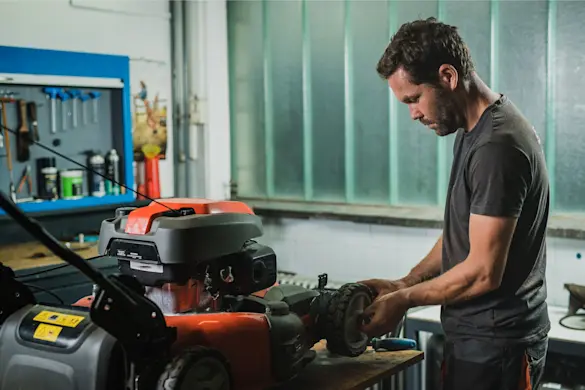
If your walk-behind lawn mower pulls, take a close look at the wheels. Over time, wheel bearings can wear out or seize up, and axles may begin to bind, especially if the mower’s been used on rough terrain. A dragging or sticking wheel can throw off the mower’s balance and make it favor one side.
Damaged wheels can also cause pulling. Spin each wheel by hand and check for signs of trouble: wobbling, cracks, bent rims, or resistance when turning. Even small damage can affect tracking and traction.
If a wheel looks worse for wear, it’s best to replace the lawn mower wheel entirely. Swapping in a new one is a straightforward fix that can quickly restore smooth, even motion with no more lopsided mowing.
Deck misalignment can tilt the cut
If your mower keeps drifting to one side, the issue might not be with the wheels at all. It could be hiding in the cutting deck. A misaligned deck, where one side sits lower than the other, can cause the mower to lean slightly and pull off course. You might also notice an uneven cut or one side of your lawn looking scalped.
Start by parking your mower on a flat surface and checking the height of the deck from side to side. Many riding and walk-behind mowers allow you to measure from the blade tip or the bottom edge of the deck to the ground.
If the deck is uneven, refer to your service manual for instructions on adjusting the deck leveling arms or linkages. Or, follow our step-by-step guide on how to level the deck on a riding mower to get started. A level deck helps distribute weight more evenly, reduces pull, and ensures a cleaner, more consistent cut across your entire yard.
Drive system problems in self-propelled mowers
If your self-propelled lawn mower pulls to one side while you're mowing, the issue might be in the drive system rather than the wheels or deck.
Start by checking the drive wheels; uneven tread wear or one wheel slipping more than the other can cause a pull. If one side is more worn or not spinning consistently, that imbalance affects traction and direction.
Next, inspect the drive cables. A stretched or uneven cable can cause one wheel to receive more power than the other, especially on models with variable-speed control. On some mowers, the drive system uses separate gear assemblies or a belt-driven transmission that may wear out unevenly or develop tension issues on one side.
Also look at the drive belt and control engagement. If the belt is slipping, loose, or misaligned, power delivery may be inconsistent, leading to uneven movement and a mower that veers off course.
If adjusting the cable tension or replacing the wheels doesn’t correct the problem, you may need to dig deeper into the drive system for wear or mechanical issues.
Uneven ground or grass conditions
Sometimes, the problem isn’t with the mower - it’s with the lawn. If your lawn mower pulls to one side only in certain areas, uneven terrain or thick grass could be to blame.
Slopes or dips in your yard can shift the mower’s weight, making it naturally veer in one direction. Wet or soft ground can also cause one wheel to sink slightly, especially on heavier mowers, creating drag on one side. Similarly, thick patches of grass may slow one wheel more than the other, throwing off your straight line.
Try mowing the same area in a different direction. If the pull disappears or shifts sides, it’s likely a terrain issue, not a mechanical one. Changing up your mowing pattern can help balance wear on your mower and give you a more even cut overall.
Quick checklist: How to stop your lawn mower from pulling
If your lawn mower pulls to one side, run through this fast set of checks to identify and correct the issue:
Check tire pressure
Low or uneven pressure throws off balance on riding mowers or self-propelled models with inflatable tires. Inflate all tires to the recommended PSI.
Inspect the wheels
Worn, cracked, or bent wheels (or seized bearings) can cause drag. Spin each wheel to check for resistance or wobble. Replace damaged wheels.
Level the cutting deck
Measure from blade tips or deck edge to the ground. Adjust the deck height if one side is sitting lower.
Test the drive system (self-propelled only)
Make sure both drive wheels are engaging evenly. Check for worn treads, uneven cable tension, or a slipping drive belt.
Check the terrain
Try mowing in a different direction. Slopes, soft ground, or thick patches can cause temporary pulling without a mechanical issue.
Still veering off course? If you’ve ruled out the easy stuff, the problem might be deeper in the drive system or chassis. Explore step-by-step guides and part replacement instructions on our DIY lawn mower repair page for more help.
Keeping your mower tracking straight doesn’t just save your arms; it makes your lawn look sharper, too.