- Kenmore refrigerator water filters
- Whirlpool refrigerator water filters
- Samsung refrigerator water filters
- GE refrigerator water filters
- LG refrigerator water filters
- Frigidaire refrigerator water filters
- KitchenAid refrigerator water filters
- Maytag refrigerator water filters
- Kenmore Elite refrigerator water filters
- Estate refrigerator water filters
- GE Profile refrigerator water filters
- Amana refrigerator water filters
- Bosch refrigerator water filters
- Dacor refrigerator water filters
- Electrolux refrigerator water filters
Top DIY repair help
View All Repair Categories
Appliances
Lawn & Garden
Power Tools
Home Improvement
Sports & Leisure
Heating & Cooling
Why your dishwasher’s top rack isn’t getting clean (and how to fix it)
less than a minute readSep 29Wayne Archer
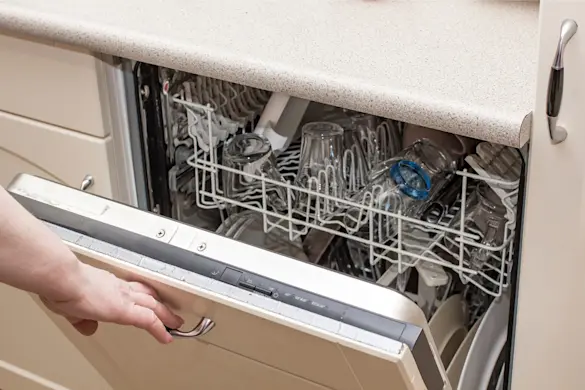
If the top rack of your dishwasher isn't getting clean, the problem usually shows up in the form of cloudy glasses, crusty bowls, or stuck-on food that should've rinsed away. It's not a sign that your entire dishwasher is failing, just that something’s off in how water reaches the upper rack.
Even quality dishwashers can leave the top rack behind when filters clog, spray arms get blocked, or key components stop working like they should. Luckily, there are a handful of common causes to check, and most of them are simple to fix.
How a dishwasher cleans the top rack
The top rack doesn't have its own water supply; it shares the system with the rest of the dishwasher. Water is pumped up from the bottom, shooting through spray arms that spin and spray high-pressure jets to clean everything in their path. Many dishwashers have a dedicated upper spray arm mounted under the top rack just for this job.
Drying happens later, usually with the help of a heating element and a rinse aid that prevents spots and speeds up evaporation.
In models with a diverter valve or diverter motor, the dishwasher doesn't spray all racks at once. Instead, it switches the water flow between the lower and upper spray arms during the wash cycle. That means if the diverter stops working right, the top rack may not get any water at all.
Common reasons the top rack isn’t getting clean
If your dishwasher top rack isn't getting clean, one or more of these common culprits could be the cause:
Clogged upper spray arm
Food particles or hard water minerals can block the small jets that spray water onto the top rack. This weakens water pressure and leaves residue behind. To fix it, remove the spray arm and rinse it thoroughly. Use a toothpick or small brush to clear out any clogged holes.
Spray arm not spinning
Sometimes the issue isn't with the spray arm itself, but with obstructions around it. Tall items, large utensils, or poorly placed dishes can stop the arm from spinning. Gently spin the upper spray arm by hand to make sure it turns freely, and avoid blocking its path when loading the dishwasher.
Weak water pressure
Low water pressure results in poor cleaning. A clogged filter or sump, or a kinked inlet hose can limit water flow to the upper rack. Clean the filter thoroughly and inspect the inlet hose and valve for any obstructions or damage.
Overloading or poor loading
Stacking dishes too tightly or nesting cups and bowls together can block water spray and reduce cleaning power. Overloading may also block the detergent dispenser. Load the dishwasher correctly by keeping space between items and angling them downward for proper draining.
Broken or disconnected spray arm
If the upper spray arm is loose or cracked, it may not spin or spray water properly. Check that the arm is firmly attached and spins freely. If it's damaged or misaligned, reseat or replace it.
Detergent or rinse aid issues
Using low-quality detergent or skipping rinse aid can lead to spotty or cloudy dishes. Weak detergent performance can leave grime behind and reduce overall cleaning. Try a higher-quality detergent and make sure the rinse aid reservoir is filled regularly.
Clogged filter or food trap
A dirty filter or food trap can restrict water circulation and reduce performance. Cleaning this area is essential. To improve water flow and prevent buildup, clean the dishwasher filter during regular maintenance.
Failed diverter motor
Some dishwashers use a diverter motor to control water flow between the upper and lower spray arms. If the motor fails or sticks in the lower position, the top rack won’t receive water. One common sign is the bottom rack comes out clean while the top rack stays dirty. In this case, a diverter motor replacement may be necessary. This is usually a moderate repair, but many models make it accessible enough for a confident DIYer.
When to replace a part or troubleshoot further
If cleaning or reseating the spray arms doesn’t solve the issue, it’s time to take a closer look at the parts themselves. Cracked or warped spray arms, worn-out mounting brackets, or broken clips can all reduce cleaning performance. Replace any damaged components to restore full function.
If the bottom rack consistently comes out clean while the top rack stays dirty, the diverter motor may no longer be switching water flow correctly. This is especially true in dishwashers designed to alternate spray between the upper and lower racks.
For more complex issues such as pump failure, water supply problems, or diverter motor replacement, explore the dishwasher DIY repair hub for troubleshooting tips and step-by-step repair guides.
Preventing future top rack cleaning issues
A few regular habits can keep your dishwasher’s top rack cleaning like it should. Rinse off large food debris before loading to reduce buildup in the spray arms or filter. Make sure you load dishes according to the rack’s design; cups and glasses facing down, with space between them so water can reach every surface. Use a good-quality detergent and keep the rinse aid reservoir filled to help water sheet off and dry more effectively.
Clean the spray arms and filters about once a month to prevent clogs from food particles or hard water. And always avoid overloading the racks or placing items in a way that blocks the spray paths.
Top rack cleaning issues are usually caused by clogs, poor loading, or minor part problems. Most of these are easy to fix yourself. Clearing debris, inspecting the spray arm, or adjusting how you load the dishwasher are usually all it takes to fix the issue.
If those steps don’t solve it, head over to our dishwasher DIY repair hub for troubleshooting tips, part guides, and repair videos to help get your dishwasher running clean again.