 Installation guide
 Owner’s manual
 Error Codes




What is the average lifespan of a GE dishwasher?
A GE dishwasher typically lasts 10 to 12 years. For your GE GSD4060D35SS, lifespan depends most on water quality, how often it runs, and routine care like keeping the wash system clear and using detergent and rinse aid correctly (see the GSD4060D35SS owner's manual).
Typical lifespan range (what to expect)
Most dishwashers fall into a practical service-life range based on use and maintenance.
| Usage pattern | Typical lifespan | What usually wears first |
|---|---|---|
| Light (few loads/week) | 12 to 15 years | Racks, door seals, dispenser parts |
| Average (1 load/day) | 10 to 12 years | Drain components, pump parts |
| Heavy (2+ loads/day) | 8 to 10 years | Pump and motor, spray arms, solenoid |
What extends the life of a GE dishwasher
We see these habits make the biggest difference on GE models:
- Run hot water at the sink before starting so the dishwasher fills with hotter water.
- Use automatic dishwasher detergent and keep it fresh and dry.
- Use rinse aid to improve drying and reduce spotting and film.
- Avoid overloading; keep spray paths clear so the spray arms can rotate freely.
- Clean out debris after a broken glass incident so it does not damage the pump.
- Fix small leaks and drainage issues early to prevent motor and wiring damage.
Parts that commonly affect “end of life” decisions
If cleaning or draining performance drops, these are common repair areas on the GSD4060D35SS:
- Wash performance: spray arm and circulation components
- Draining problems: drain hose, drain solenoid, pump impeller
- Noisy operation: pump and motor assembly, seals
A frequent repair on older units is the GE dishwasher pump and motor assembly WD26X10051, especially when the dishwasher is loud, not circulating water well, or leaving soil behind.
Why it matters
A dishwasher near the end of its lifespan often shows up as longer cycles, poor cleaning, standing water, or repeated leaks. Addressing those symptoms early usually prevents secondary damage to the pump, motor, and tub area.
Last updated: February 2026
Can I replace dishwasher parts myself?
Yes, for the GE GSD4060D35SS dishwasher you can replace many common parts yourself if you shut off power and water first and follow the steps in the GSD4060D35SS owner's manual. For electrical wiring, grounding, or complex service, we recommend using a qualified technician.
Good DIY repairs vs. better left to a pro
Many dishwasher repairs are straightforward, but anything involving electrical connections or major disassembly raises the risk of shock, leaks, or repeat failures.
Usually DIY-friendly
- Replacing racks and rack components (fit and function issues)
- Swapping a spray arm if it is cracked, clogged, or not spinning
- Replacing a drain hose if it is split, kinked, or leaking
- Replacing an access panel or toe panel after service
Often better for a technician
- Hard-wiring, grounding, or diagnosing power supply issues
- Pump and motor diagnosis when symptoms are intermittent
- Leak diagnosis when water appears under the tub (multiple possible sources)
Parts that are commonly replaced on this model
If your symptoms match, these model-compatible parts are common starting points:
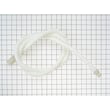
- Dishwasher drain hose WD24X10014 for leaks or poor draining caused by a damaged hose
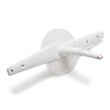
- Dishwasher spray arm WD22X10055 for poor cleaning from a cracked or clogged arm
- GE dishwasher pump and motor assembly WD26X10051 for circulation problems (no wash action, loud grinding)
Quick safety and prep checklist
Before you start any repair:
- Disconnect electrical power; turning the dishwasher off does not disconnect power
- Shut off the water supply valve
- Protect the floor; keep towels ready for residual water
- Keep small parts (clips, posts) away from children
- Reinstall panels and the toekick correctly when finished
Drain and installation details that affect DIY success
Drain setup mistakes cause repeat “won’t drain” complaints even after a part swap.
| Item to verify | What to do | Why it matters |
|---|---|---|
| Drain hose length | Keep total length at 10 ft or less | Longer runs can prevent proper draining |
| High loop or air gap | Use a high loop or an air gap as required | Prevents backflow and siphoning |
| Disposer connection | Remove the disposer inlet plug (if used) | A blocked inlet stops draining |
Why it matters
DIY repairs can save time and money, but dishwashers combine water, electricity, and tight clearances. Following the GSD4060D35SS installation guide helps prevent leaks, drainage issues, and access-panel damage after the repair.
Last updated: February 2026
What is the most common problem with GE dishwashers?
The most common problems we see on GE dishwashers like model GSD4060D35SS are not draining, not starting, and poor cleaning, usually caused by a clog, a door-latch or power issue, or restricted water flow. Your GSD4060D35SS owner's manual troubleshooting chart helps narrow it down fast.
Most common issues and what to check first
- Won’t run or seems dead: check the breaker or fuse, and confirm any nearby wall switch is ON (some installs power the dishwasher from a switch).
- Not draining: check for a kinked or restricted drain line; inspect the dishwasher drain hose WD24X10014 routing and air gap/disposer connection.
- Not cleaning well: clear spray arm holes and confirm the spray arms spin freely; a worn pump or restricted sump can reduce wash pressure.
- Detergent problems (cloudy dishes, residue): use fresh automatic dishwasher detergent and dose for your water hardness.
- Hard-water film or white residue: mineral buildup can affect performance and even cause valve sticking; address water hardness and run a cleaning cycle.
Quick symptom-to-likely-cause guide
| Symptom | Most likely cause | Good first step |
|---|---|---|
| Dishwasher won’t run | Power supply, wall switch, door latch/start reset | Reset breaker; try START/RESET per manual |
| Water left in tub | Drain restriction or drain components | Check hose routing and clogs |
| Dishes still dirty | Spray arm blockage, low wash pressure | Clean spray arms; verify free rotation |
| White film on tub/dishes | Hard water minerals | Adjust detergent; treat hard water |
Parts that commonly solve these problems
If basic checks point to a failed component, these model-matched parts are common fixes:
- GE dishwasher drain solenoid assembly WD21X10268 (drain actuation issues)
- GE dishwasher pump and motor assembly WD26X10051 (weak wash, unusual motor behavior)
- Dishwasher circulation pump WD19X10020 (low circulation and poor cleaning)
- Dishwasher spray arm, lower WD12X10244 (clogged or damaged spray pattern)
Why it matters
Drain, wash, and start problems often share the same root causes: restricted water movement, mineral buildup, or a simple power/door condition. Catching those early prevents repeat cycles, standing water, and poor results.
Last updated: February 2026
Does a 20 year old GE dishwasher have a filter?
Yes. A 20-year-old GE dishwasher like model GSD4060D35SS uses a filter system, and many units from this era use a self-cleaning filter setup that does not require routine removal and rinsing like newer manual-clean filters.
How to tell what type of filter you have
Check the bottom of the tub (under the lower rack) and compare what you see to the diagrams and care instructions in the GSD4060D35SS owner’s manual.
Common signs:
- Self-cleaning filter: no twist-out cylindrical filter cup; you mainly see a fixed screen area over the sump.
- Manual-clean filter: a clearly removable filter assembly (often twists or lifts out) meant to be rinsed.
- Food chopper style (common on older designs): grinding noise during wash, with a screen that rarely needs user cleaning.
What we recommend for maintenance
Even with a self-cleaning filter, performance drops if the sump area or spray arms get restricted.
Do these basics:
- Scrape heavy food off dishes before loading.
- Make sure the spray arms spin freely and holes are not clogged.
- Run hot water at the sink before starting a cycle (helps wash performance).
- Use dishwasher detergent made for automatic dishwashers and keep it dry.
- Use rinse aid to reduce spots and improve drying.
When “filter problems” are really a wash or drain issue
If you are seeing standing water, gritty residue, or poor cleaning, the issue is often circulation or draining, not the filter itself.
| Symptom | Most likely area to check | Example part for this model |
|---|---|---|
| Dishes not clean | Circulation, spray pattern | Dishwasher spray arm WD22X10055 |
| Water left in tub | Drain path, hose, solenoid | Dishwasher drain hose WD24X10014 |
| Loud humming, weak wash | Pump and motor | GE dishwasher pump and motor assembly WD26X10051 |
Why it matters
Knowing whether GSD4060D35SS has a self-cleaning or manual-clean filter helps you avoid unnecessary disassembly and focus on the real causes of poor cleaning, odors, or draining problems.
Last updated: February 2026





