Installation guide
 Owner’s manual
 Error Codes


Where to put detergent in GE stacked washer?
For the GE GTUP270GM4WW laundry center, detergent goes into the washer’s detergent dispenser area (not directly into the tub). Use the dispenser for the wash cycle you’re running, and follow the fill lines so you do not over-suds or leave residue. See the GTUP270GM4WW owner's manual for the exact dispenser locations and fill guidance.
Quick placement guide (most common setups)
Use this checklist to choose the right spot based on what your unit has:
- Detergent drawer present: add detergent to the detergent compartment (often marked “II” for main wash)
- No drawer, but a dispenser cup in the washer top: add detergent to the main wash cup
- No dispenser at all: add detergent to the wash basket before loading clothes (liquid first, then laundry)
- HE detergent: use less than you think you need; too much causes oversudsing and poor rinsing
- Pods/packs: place in the empty basket first, then add clothes
How much detergent should we use?
Most oversudsing complaints on stacked laundry centers come from using too much detergent, especially with HE formulas.
| Load size | Typical HE liquid amount | What to watch for |
|---|---|---|
| Small | 1 to 2 tablespoons | Suds lingering after drain |
| Medium | 2 to 3 tablespoons | Detergent smell after rinse |
| Large | 3 to 5 tablespoons | White streaks or residue |
Why it matters
Using the correct dispenser location helps the washer time the detergent release properly. That improves cleaning, reduces residue on clothes, and helps protect components like the drain system and drive belt from detergent buildup.
If detergent is not dispensing or you see residue
- Clean the dispenser and siphon caps (if equipped) with warm water
- Confirm water supply valves are fully open and hoses are not kinked
- Reduce detergent amount and rerun a rinse
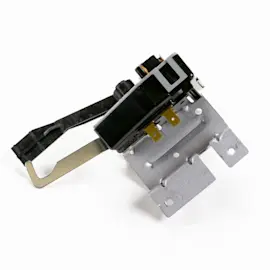
- If the washer will not start because it will not lock, check the washer lid lock WH44X10288
You can order model-correct replacement parts for GTUP270GM4WW from the parts list for this model, or search by model number on Sears PartsDirect.
Last updated: February 2026
Is there a reset button on a GE stackable washer and dryer?
GE laundry centers like model GTUP270GM4WW typically do not have a dedicated reset button. The practical “reset” is a power reset: turn the controls off, unplug the unit (or switch the breaker off) for a few minutes, then restore power and restart the cycle using the steps in the GTUP270GM4WW owner's manual.
How to reset (power reset) safely
- Turn the washer and dryer controls to Off.
- Unplug the laundry center; if it is hardwired, switch the circuit breaker off.
- Wait 2 to 5 minutes to let the control board fully power down.
- Restore power.
- Select a cycle and press Start.
- If the washer lid is locked, wait for it to unlock before opening.
When a “reset” helps (and when it will not)
A power reset helps when the control is temporarily confused by a power flicker, a paused cycle, or an unresponsive keypad. It will not fix a failed part such as a lid lock or a heating component.
| Symptom | Try a power reset? | Common next step |
|---|---|---|
| Controls unresponsive | Yes | Check house power and breaker, then retry cycle |
| Washer will not start and lid will not lock | Sometimes | Inspect/replace the washer lid lock WH44X10288 |
| Dryer runs but no heat (gas model) | Sometimes | Check airflow, then test igniter/thermostats |
| Dryer squeals or thumps | No | Inspect drum glides and blower wheel |
Why it matters
Resetting the control is the fastest first step because it can clear a temporary electronic “hang” without replacing parts. If the problem returns quickly, the symptom usually points to a specific component (lid lock, igniter, thermostat, motor, or wiring).
If the issue keeps coming back
- Confirm the outlet has steady power and the breaker is not tripping.
- Check that the washer lid closes firmly and the strike lines up with the lock.
- For dryer heat issues, verify the vent is not crushed or clogged.
- If you suspect wiring damage, use the how to repair broken or damaged wires video as a safe overview before attempting any repair.
- Order model-matched replacement parts from the parts list for GTUP270GM4WW, or search by model on Sears PartsDirect.
Last updated: February 2026
Is the GE washer dryer combo 110 or 220?
For the GE GTUP270GM4WW unitized gas laundry center, the electrical requirement is 120V (110-120V), 60 Hz on a properly grounded 3-prong outlet; it is not a 240V (220V) electric-dryer style connection. We recommend a dedicated 15- or 20-amp branch circuit and plugging the cord directly into the receptacle as shown in the installation guide.
What to plug it into
Use a standard grounded household outlet that matches the factory 3-prong plug.
- Supply: 120V, 60 Hz
- Circuit: 15- or 20-amp breaker or time-delay fuse
- Receptacle: properly grounded 3-prong
- Connection: plug in directly (no extension cords, no adapter plugs)
Why some people think it is 220V
Many standalone electric dryers use 240V (often called 220V). This model is a gas dryer laundry center, so the dryer heat comes from gas; the 120V power runs the motor, controls, igniter system, and other electrical components.
Quick safety checklist before you power it up
- Confirm the outlet is grounded and not controlled by a wall switch.
- Do not use an extension cord or plug adapter.
- Keep the unit where ambient temperature stays above 50°F for proper dryer control operation.
- Leave enough space to connect water, drain, electrical, and venting.
Electrical at a glance
| Item | What GTUP270GM4WW uses | What a typical electric dryer uses |
|---|---|---|
| Voltage | 120V | 240V |
| Plug style | 3-prong grounded | 3- or 4-prong 240V |
| Heat source | Gas | Electric element |
Why it matters
Using the correct voltage protects the electronic controls and motor, helps prevent nuisance tripping, and supports safe grounding. Incorrect power connections can also cause no-start symptoms that look like a failed control board or motor.
If you are troubleshooting a no-heat or no-start condition after confirming correct power, common related parts for this model include the dryer burner igniter WE04X25996 and the laundry center electronic control board WH12X10586. You can order replacement parts from the parts list for this model or search by model number on Sears PartsDirect.
Last updated: February 2026
How do I get my GE washer to drain and spin?
On the GE GTUP270GM4WW laundry center, you run drain and spin by selecting the cycle that pumps water out and then spins, then pressing Start with the lid fully closed and locked. If it will not drain or spin, we check the lid lock and drain-hose setup first.
Quick steps to run drain and spin
- Set the washer control to a cycle that includes drain and spin (often labeled “Drain & Spin” or similar).
- Select a spin speed (if your control offers it).
- Press Start.
- Keep the lid closed until the cycle finishes; the washer will not spin if the lid is not locked.
- If the tub is full, allow time for pump-out before the basket reaches full spin.
If it will not drain: check the drain setup
Drain issues are commonly caused by siphoning, a kinked hose, or a restricted standpipe.
- Drain discharge height: 30 inches minimum, up to 6 ft maximum above the washer base.
- Standpipe: 1-1/2 inches minimum inside diameter.
- Keep the drain connection open to air (do not seal it airtight).
- Insert the hose only to the hose stopper; removing it can cause siphoning.
| Setup item | Target | Why it matters |
|---|---|---|
| Standpipe height | 30 in min to 6 ft max | Prevents drain-back and siphoning |
| Standpipe diameter | 1-1/2 in min | Helps prevent overflow and slow draining |
| Drain connection | Open to atmosphere | Helps the pump move water reliably |
For the exact routing and hookup details for GTUP270GM4WW, follow the installation guide.
If it drains but will not spin
A failed lid lock commonly stops spinning.
- Listen for the lid lock click after pressing Start.
- Check the lid strike area for misalignment.
- Replace a failed lock with the washer lid lock WH44X10288.
Why it matters
Correct drain height and a working lid lock let the washer remove water and reach full spin speed, so clothes come out less wet and the cycle completes normally.
You can order replacement parts from the parts list for GTUP270GM4WW, or search by model number on Sears PartsDirect.
Last updated: February 2026