Installation guide
 Owner’s manual


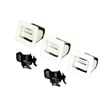
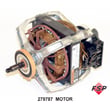
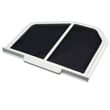
Can I replace a dryer heating element myself?
Yes, many homeowners can replace the heating element in a Kenmore 11067761600 dryer if they’re comfortable working with electrical appliances and can follow step-by-step instructions. The key is disconnecting power first, documenting wire locations, and reassembling the heater housing correctly using the 11067761600 owner's manual.
Before you start (safety and prep)
Replacing a heating element involves exposed wiring and sharp metal panels. We follow the same core safety approach the manufacturer calls out: do not service the dryer unless the instructions make sense and you have the skills to carry them out.
- Unplug the dryer (electric shock prevention)
- If it’s a gas model, shut off the gas supply valve before opening panels
- Let the dryer cool completely
- Take photos of wire connections before removing anything
- Use work gloves; cabinet edges can be sharp
- Clean lint from the heater area and vent path while you’re inside
Parts that are commonly involved
For this model, the heating element itself is a common replacement when the dryer runs but has no heat.
- Dryer heating element WP3387747 (the heater coil assembly)
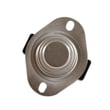
- Dryer operating thermostat WP3387134 (can fail and affect heat control)
- Cut-off kit 279769 (thermal cut-off and related safety components)
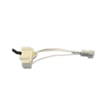
- Dryer heating element wire kit 279457 (useful if terminals are heat-damaged)
Basic DIY outline (what the job usually looks like)
Steps vary by configuration, so we use the manual for panel access and wire routing.
- Disconnect power (and gas shutoff if applicable).
- Remove the rear panel or front access panel (per the manual).
- Label and disconnect wires from the heater terminals.
- Remove the heater housing fasteners and swap in the new element.
- Reconnect wires exactly as documented.
- Reassemble panels, restore power, and test a timed heat cycle.
Quick decision guide
| What you see | Most likely issue | What we typically replace |
|---|---|---|
| Drum turns, no heat | Heater circuit problem | Heating element, thermal cut-off, thermostat |
| Burning smell, scorched terminals | Overheating or loose connection | Wire kit plus the failed component |
| Heat comes and goes | Temperature control issue | Operating thermostat (sometimes) |
Why it matters
A correctly installed heating element restores drying performance and helps prevent repeat overheating. While you’re in the cabinet, removing lint buildup also improves airflow and reduces nuisance shutdowns.
Last updated: February 2026
How do I know if my Kenmore dryer thermal fuse is blown?
On a Kenmore 11067761600 dryer, a blown thermal fuse commonly shows up as a dryer that will not run at all, or a dryer that tumbles but has no heat. The sure way to confirm is a continuity test with a multimeter after unplugging the dryer.
Quick symptoms to look for
- Dryer will not start even with a cycle selected and the door closed
- Drum turns but there is no heat (electric models can still tumble if one house fuse trips)
- Cycle stops early or acts “dead” after overheating
- You recently had poor airflow (clogged lint screen or blocked vent)
Confirm it with a continuity test (best check)
- Unplug the dryer or disconnect power at the breaker.
- Access the thermal fuse (location varies by design; use the 11067761600 owner's manual for access guidance and safety notes).
- Remove at least one wire from the fuse terminal.
- Test across the fuse with a multimeter set to continuity or ohms.
How to read the meter
| Meter result | What it means | What to do next |
|---|---|---|
| Beep or near 0 ohms | Fuse is good | Keep troubleshooting airflow, heat circuit, or power supply |
| No beep or OL/infinite | Fuse is blown | Replace the thermal fuse and correct the overheating cause |
What to check before replacing parts
Our Kenmore dryer troubleshooting guidance also points to basic “no run” and “no heat” checks that can mimic a blown fuse:
- Make sure the Start button is pressed firmly and a cycle is selected
- Confirm the door is fully closed (a failed dryer door switch WP3406107 can prevent starting)
- For electric dryers, check both household fuses or both breakers (the drum may turn with no heat)
- Inspect and clean the lint screen and venting for restrictions
Why it matters
A thermal fuse is a safety device; when it opens, it usually means the dryer overheated. Replacing the fuse without fixing airflow (lint buildup, crushed vent, long vent run) often leads to repeat failures.
Last updated: February 2026
How do I know if my dryer element is bad?
If your Kenmore dryer model 11067761600 runs but won’t heat, takes much longer to dry, or repeatedly trips a breaker, the heating element is a top suspect. Before replacing it, confirm the dryer has the correct power supply and that airflow is not restricted (both can mimic a bad element). See the 11067761600 owner’s manual for model-specific troubleshooting.
Common signs the heating element is failing
- Drum tumbles normally but there is no heat
- Clothes stay damp after a full cycle, especially on timed dry
- Heat is intermittent (temperature swings more than normal)
- A burning smell or “hot metal” odor that persists beyond first-use odor
- The dryer repeatedly blows a fuse or trips a breaker when heat should turn on
Rule out the most common “not the element” causes first
The manual notes electric dryers require a 240V power supply, and many use two household fuses or breakers; the drum can still turn even if one side of the 240V supply is lost. Use these checks before ordering parts:
- Verify the dryer is on a proper 240V circuit (not a standard 120V outlet)
- Check/reset both breakers (or replace both fuses if applicable)
- Confirm the door fully closes and Start is pressed firmly
- Inspect and clean the lint screen and venting; crushed or kinked venting can reduce drying performance
- If you see an L2 code during initial diagnostics, focus on the home power supply first (heater may not be getting full voltage)
Quick diagnostic: symptoms comparison
| What you see | More likely cause | What to check next |
|---|---|---|
| Tumbles, no heat | Power supply issue or heater circuit | Breakers/fuses, then heater circuit continuity |
| Long dry times, heat feels weak | Airflow restriction | Lint screen, ducting, outside vent hood |
| No heat and shuts down on high temp | Overheat protection opening | Vent restriction, then thermal cut-off components |
When replacement makes sense
If power and airflow check out, testing typically confirms the element is open (no continuity). For this model, the correct replacement is the dryer heating element WP3387747.
Why it matters
A weak or failed heating element can look like a venting problem, and a venting problem can cause overheating that damages heater circuit parts. Checking power and airflow first helps you fix the real cause and avoid repeat failures.
Last updated: February 2026
How do I tell what model my Kenmore dryer is?
Your Kenmore dryer’s model number is printed on the model and serial number label; on model 11067761600, that label is located at the top inside the dryer door well. Once you have the full model number, you can match the correct parts, wiring, and venting requirements.
Where to look on Kenmore model 11067761600
Check these spots in this order:
- Top inside the dryer door well (most common for this model)
- Around the door opening on the cabinet frame
- On the rear panel (some installations make this easier to see)
- Inside the lint screen housing area (varies by design)
For a diagram of label location and other identification details, use the 11067761600 owner's manual.
What the model number looks like (and why it matters)
Kenmore model numbers are usually a long string of digits. For many Kenmore dryers, the first three digits (often 110) help identify the manufacturing source, which matters because parts like a heating element, timer, or door switch must match the exact design.
Quick ID checklist
- Write down the full model number exactly as shown
- Record the serial number too (helps with production variations)
- Take a clear photo of the label before ordering parts
Common examples of parts that require the exact model
Even small differences in model series can change fit and wiring. Here are examples of parts on this model that must match correctly:
| Part type | Example for this model | Why the exact model matters |
|---|---|---|
| Heating | Dryer heating element WP3387747 | Correct wattage, terminals, and housing fit |
| Door safety | Dryer door switch WP3406107 | Ensures the dryer starts only when the door is closed |
| Drum support | Support WPW10314173 | Prevents noise and drum wear from wrong roller style |
Why it matters
Using the exact model number helps us get you the right Kenmore dryer parts the first time, and it also keeps troubleshooting accurate (for example, venting and electrical requirements can vary by design).
Last updated: February 2026
How to open Kenmore dryer control panel?
On the Kenmore 11067761600 dryer, opening the control panel typically means removing the top panel first, then taking out the screws that secure the console so you can tilt it up and access the timer or electronic control. Follow the access steps in the 11067761600 owner's manual before servicing.
Before you start (safety and prep)
- Unplug the dryer (or disconnect power at the breaker) before removing any panels.
- If the dryer is direct-wired, disconnect power at the breaker and confirm power is off.
- Pull the dryer forward enough to work comfortably without stressing the vent.
- Keep a small cup for screws; console screws are easy to lose.
- Take a quick photo of wire connections before unplugging anything.
Typical control panel access steps
- Disconnect power.
- Remove the top panel:
- From the back of the dryer, remove the screws along the rear edge of the top.
- Lift the rear of the top panel, slide it back about 1 inch, then lift it off.
- Open the console/control panel:
- Locate and remove the console mounting screws (often 1/4-inch hex-head screws) that become visible once the top is off.
- Tilt the console forward or lift it up (depending on the console style).
- Access components:
- For mechanical models, you will see the dryer timer area.
- For electronic models, you will see the control board area.
What you can access once it’s open
| Component | What it affects | Common symptom |
|---|---|---|
| Dryer timer | Cycle timing and motor power routing | Won’t advance, won’t start in certain cycles |
| Dryer door switch | Start enable and door safety | Dryer won’t start, light behavior issues |
| Dryer electronic control board | Cycle logic and sensor inputs | Random stopping, incorrect cycle behavior |
Why it matters
Opening the control panel the right way prevents broken console tabs, pinched wiring, and misaligned knobs. It also makes troubleshooting “won’t start” and “cycle won’t advance” problems faster and safer.
Last updated: February 2026
Is it worth replacing a dryer heating element?
Yes, it’s usually worth replacing the heating element in your Kenmore 11067761600 dryer when the drum tumbles but there’s no heat, especially if the rest of the dryer is in good shape. A failed element is a common, fixable cause of “no heat.”
When replacing the heating element makes sense
Replacing the element is typically a good value when you confirm the dryer has proper power and airflow, and the heater circuit is the issue.
- The dryer runs but clothes stay cold or take far too long to dry
- You have correct electrical supply (electric dryers need 240V) and the door fully closes
- You’ve checked the home fuses or breakers (many electric dryers use two fuses/breakers; the drum can run with no heat)
- The vent is not crushed or blocked (restricted airflow can overheat and damage heater components)
- The dryer is otherwise quiet and mechanically sound (no loud squeal, grinding, or burning smell)
Helpful references: 11067761600 owner’s manual, installation guide.
Quick cost vs. benefit checklist
| Option | Typical outcome | Best when |
|---|---|---|
| Replace heating element | Restores heat; normal dry times return | Dryer is in good condition and you want the most cost-effective fix |
| Replace multiple wear items at once | Reduces repeat tear-downs | Dryer is older and you’re already opening the cabinet |
| Replace dryer | Higher cost; new features/efficiency | Multiple major failures or severe cabinet/drum damage |
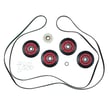
If you’re already inside the cabinet, bundling common wear parts can be smart. For this model, a kit like the dryer repair kit 4392067 often addresses drum support and belt-related wear that can show up around the same time.
Why “no heat” is not always the heating element
On the Kenmore 11067761600, “no heat” can also be caused by power supply issues or airflow problems.
- Power supply: A tripped breaker or blown fuse can leave the motor running but disable the heater
- Airflow restriction: Crushed/blocked venting traps lint and heat, which can lead to repeated thermal cutoffs
- Thermostat/thermal protection: A failed thermostat or cutoff can stop the heater even if the element is good
Related parts that commonly pair with a heater repair include the dryer heating element WP3387747, dryer operating thermostat WP3387134, and the cut-off kit 279769.
Why it matters
Restoring proper heat and airflow protects fabrics, shortens dry times, and helps prevent overheating that can damage thermostats, wiring, and the new heating element.
Last updated: February 2026
What are common problems with Kenmore dryers?
Common problems on the Kenmore 11067761600 dryer include no heat, the dryer not starting, long dry times from restricted airflow, the drum not turning, and unusual noises from worn moving parts. Our troubleshooting steps in the 11067761600 owner's manual cover the quickest checks first.
Most common symptoms and what usually causes them
- Dryer will not run: door not fully closed, Start not pressed firmly, cycle not selected, tripped breaker or blown fuse (many dryers use two)
- No heat (drum turns but clothes stay wet): one fuse/breaker tripped, failed heating circuit parts such as the operating thermostat or heating element
- Long drying times: lint screen clogged, crushed or blocked venting, restricted air ducting
- Drum not turning: worn belt system components, idler pulley issues, motor problems
- Loud thumping/squealing/grinding: worn drum support rollers, idler pulley wear, small items caught at drum edges
Quick checks we recommend before replacing parts
- Confirm the dryer is getting the correct power (electric dryers typically need 240V; a partial power loss can cause “runs but no heat”).
- Check both household fuses or both breaker poles; reset/replace as needed.
- Make sure the door closes and latches consistently; a failed switch can prevent starting.
- Clean the lint screen and inspect the vent for crushing, kinks, or blockage.
- Listen for where the noise comes from (front, rear, or under the drum) to narrow the likely wear item.
Parts that commonly fix these issues on this model
| Symptom | Common part to check | Example part for this model |
|---|---|---|
| No heat | Heating element | Dryer heating element WP3387747 |
| Won’t start | Door switch | Dryer door switch WP3406107 |
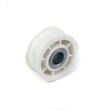
| Squealing or drum drag | Idler pulley | Dryer idler pulley 279640 |
| Thumping/rumble | Drum support roller | Support WPW10314173 |
| Overheats or cycles heat oddly | Operating thermostat | Dryer operating thermostat WP3387134 |
Why it matters
Most “Kenmore dryer problems” trace back to power delivery (two fuses/breakers), airflow (lint and vent restrictions), or normal wear in drum support and belt-drive components. Fixing airflow and worn rollers early helps prevent repeat no-heat and long-dry complaints.
Last updated: February 2026
What size is a Kenmore Model 11067761600 dryer?
The Kenmore 11067761600 dryer is a 29-inch wide dryer; the installation guide shows a cabinet width of 29 in (737 mm). For the exact height and depth for your door style and setup, we recommend confirming the full dimension diagram in the 11067761600 installation guide.
Key dimensions and clearances to plan for
Here are the measurements and spacing that matter most when you are fitting the dryer into a laundry room, closet, or recessed area:
- Width: 29 in (737 mm)
- Minimum rear clearance (typical): plan for at least 5 in (127 mm) behind the dryer for the exhaust vent and elbow
- Floor requirement: level within 1 in (25 mm) slope under the entire dryer
- Electrical: a separate 30-amp circuit is required
- Outlet location (cord-connected installs): grounded outlet within 2 ft (610 mm) of either side of the dryer
Door style can change the “overall” footprint
The installation dimension diagram shows multiple door options (small opening, large opening, wide opening, hamper door). The cabinet width stays the same, but the space you need in front can vary.
| What you are measuring | What to use | Why it matters |
|---|---|---|
| Space side-to-side | 29 in width | Ensures the dryer fits between walls/cabinets |
| Space front-to-back | Dryer depth + vent clearance | Prevents crushed venting and poor airflow |
| Space in front | Door swing clearance | Lets the door open fully for loading/unloading |
Why it matters
Correct sizing prevents installation problems like a kinked exhaust duct (long dry times, overheating risk), a door that cannot open fully, and vibration from an unlevel floor. Proper clearance also makes future service easier.
Last updated: February 2026