Owner’s manual



How to hard reset a Kenmore dryer?
To hard reset your Kenmore dryer model 79680318900, unplug it (or switch off the breaker) for 1 to 5 minutes, then restore power and start a cycle. This clears many temporary control glitches; if the dryer still will not run or heat, a venting or safety cutoff issue is more likely than a “reset” problem.
Hard reset steps (works for most electronic Kenmore dryers)
- Turn the dryer OFF.
- Unplug the power cord (or turn the circuit breaker OFF).
- Wait 1 to 5 minutes.
- Restore power.
- Close the door firmly and press Start/Pause to begin a cycle (the control uses the Start/Pause button to run and resume cycles).
- If the dryer was paused and sat too long, restart the cycle; many dryers turn off automatically after several minutes stopped.
For control and cycle basics specific to this model, use the 79680318900 owner's manual.
If a reset does not fix it, check these common causes
A “hard reset” only clears the control; it does not fix airflow restrictions or failed safety devices.
- Clogged venting or lint buildup (can cause long dry times, overheating, or shutdowns)
- Door not fully closed or a failing door switch
- Overheating protection tripping (often tied to restricted airflow)
- No heat from a failed heating circuit component
- Drum not turning due to a worn belt or pulley
Quick symptom guide
| What you see | What it usually points to | What to do next |
|---|---|---|
| Dryer runs but no heat | Heating circuit issue | Inspect heater wiring and components; reference the manual’s troubleshooting section |
| Dryer stops mid-cycle | Overheating or airflow restriction | Clean lint screen and vent path; confirm strong exhaust airflow |
| Drum will not turn | Belt or idler problem | Inspect belt routing and pulley condition |
| Will not start | Door switch, power, or control lock | Confirm door closes, power is present, and control lock is off |
Why it matters
Resetting is a fast first step, but dryers commonly “act up” because airflow is restricted. Good venting helps prevent overheating, reduces dry time, and protects key parts like thermostats and the heating element.
Last updated: January 2026
What is the average life of a Kenmore dryer?
A Kenmore dryer like model 79680318900 typically lasts 10 to 13 years. With consistent lint and vent maintenance, many dryers reach the upper end of that range because proper airflow reduces heat stress on parts such as the heating system, thermostats, and motor.
Typical lifespan and what affects it
Most dryer life comes down to heat, airflow, and mechanical wear.
- Cleaning the lint screen every load helps maintain airflow and drying performance.
- Keeping the exhaust duct clear helps prevent overheating and long run times.
- Avoiding overloading reduces strain on the drum belt, idler pulley, and drum rollers.
- Using the right cycle (sensor dry vs. timed dry) prevents unnecessary run time.
- Fixing squeaks, thumps, or burning smells early prevents secondary damage.
Maintenance checklist that extends dryer life
The 79680318900 manual emphasizes regular cleaning and safe operation. Use the 79680318900 owner's manual for model-specific care steps.
| Task | How often | Why it matters |
|---|---|---|
| Clean lint screen | Every load | Improves airflow and drying time |
| Check vent airflow outside | Monthly | Prevents overheating and shutdowns |
| Clean exhaust duct | Every 6 to 12 months | Reduces fire risk and wear on thermostats |
| Wipe door opening and seal area | Monthly | Prevents lint buildup that can affect sealing |
When wear parts start to shorten dryer life
If the dryer runs but tumbles poorly, squeals, or stops mid-cycle, common wear items are often involved.
- Slipping or broken belt: dryer drum belt 4400EL2001F
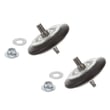
- Worn rollers causing thumping: dryer drum support roller 4581EL2002H
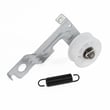
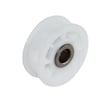
- Weak idler pulley causing squeal or belt issues: dryer idler pulley 4560EL3001A
Why it matters
A dryer that is taking longer to dry usually runs hotter and longer than it should. That extra heat and run time accelerates failure of heating components (like the heating element and high-limit thermostat) and increases overall wear.
Last updated: January 2026
How much does it cost to replace a heating element in a Kenmore dryer?
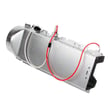
For Kenmore dryer model 79680318900, replacing the heating element typically costs $150 to $450 total: about $80 to $300 for the part (depending on whether it is sold as an element or an element housing assembly) plus $100 to $250 labor if you hire service. Confirm the exact procedure in the 79680318900 owner's manual.
Typical cost breakdown
Costs vary most by the exact heater assembly used and whether you DIY or hire a technician.
- Part only (DIY): commonly $80 to $300
- Labor (service call + install): commonly $100 to $250
- Total installed: commonly $150 to $450
- Extra costs: vent cleaning, damaged wiring, or a failed thermostat can add cost
| Scenario | What you pay for | Typical total |
|---|---|---|
| DIY replacement | Heating element + your time | $80 to $300 |
| Pro replacement | Part + labor | $150 to $450 |
| “No heat” but element is OK | Thermostat/thermistor diagnosis + parts | $150 to $400 |
What to check before buying a heating element
A “no heat” complaint is often caused by airflow or safety devices, not just the element.
- Verify the dryer is on a proper 240 VAC circuit (electric models will run but not heat on incorrect power)
- Check and clean the lint screen and vent duct; the manual recommends checking venting and cleaning ductwork at least yearly
- If heat is weak, confirm exhaust air is warm after about 3 minutes on a Normal cycle (electric models)
- Consider related heat-control parts such as the dryer high-limit thermostat 6931EL3003D or the dryer thermistor AGM30045804
Why it matters
Overheating from restricted venting can repeatedly trip high-limit protection and shorten the life of the heating system. Fixing airflow first helps the new heating element last longer and improves drying performance.
Last updated: January 2026
How do I tell what model Kenmore dryer I have?
Your Kenmore dryer’s model number is printed on the identification plate inside the dryer door. Open the door and look along the door opening on the cabinet frame; the plate lists the model and serial number you will use to match parts and the correct 79680318900 owner's manual.
Where to look on the dryer
Check these common label locations first:
- Inside the dryer door on the cabinet frame (most common)
- Along the door opening near the latch area
- On the back of the dryer near the top (some installations)
- On the side panel near the rear edge (less common)
What to write down (and why)
Record both numbers exactly as shown.
| Item on the label | What it’s used for | Example format |
|---|---|---|
| Model number | Ensures parts fit your exact dryer configuration | 79680318900 |
| Serial number | Helps identify production run details for service | Letters and numbers |
Why it matters
Kenmore model numbers can look similar, but small differences change which parts fit (for example, a dryer heating element, thermistor, or door switch). Using the exact model number helps us match the right diagrams, troubleshooting steps, and replacement parts the first time.
Quick tip for parts matching
When you search parts for this dryer, match the full model number exactly (all digits). If you are replacing a wear item like a belt, use the model number to confirm the correct part, such as the dryer drum belt 4400EL2001F.
Last updated: January 2026