 Owner’s manual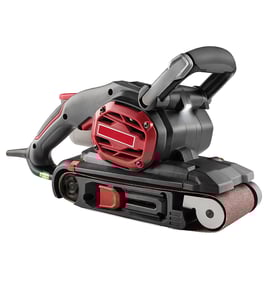

What are the parts of a sander?
On the Craftsman 351215140 belt and disc sander, the main parts include the sanding belt and disc assemblies, work table, miter gauge, work stop, dust port, motor, and the on/off switch. These parts work together to guide the workpiece and power the sanding action safely.
From the owner's manual, the sander is supplied as one assembled unit, plus several components you attach during setup. Common assemblies include:
- Belt assembly (belt housing can pivot from vertical to horizontal)
- Disc sanding area (used for sanding and beveling)
- Work table (supports the workpiece)
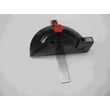
- Miter gauge assembly (guides the workpiece at an angle)
- Work stop (helps support long pieces on the belt)
- Dust port (2-inch port that collects dust from belt and disc)
- Motor and power cord (120-volt, 3-conductor cord)
- Locking rocker switch with removable key (helps prevent unauthorized use)
The manual lists these items as included with the Craftsman 351215140:
| Item | What it does |
|---|---|
| Miter gauge assembly | Guides sanding angle on the table |
| Work stop | Supports long stock on the belt |
| Table | Work support surface |
| Abrasive disc | Disc sanding surface |
| Knobs, feet, mounting brackets, bolts, washers, nuts | Mounting and assembly hardware |
| Hex wrenches and open-end wrench | Basic setup tools |
These are the parts we focus on first when a sander will not start or runs intermittently:
- Switch and key (single-pole locking rocker switch)
- Power cord (3-conductor cord)
- Ground wire connection (must stay secured to the frame)
- Motor leads and connections (per the wiring schematic)
Knowing the major parts helps you troubleshoot faster. For example, poor dust collection points to the dust port or airflow path, while a no-start issue often points to the switch, cord, or a loose ground connection.
Last updated: February 2026
How to install belt on Craftsman belt sander?
To install an abrasive belt on your Craftsman belt and disc sander model 351215140, you loosen the belt tension, slip the belt over the drive and idler drums, then re-tension and track it so it runs centered. Use the steps and diagrams in the 351215140 owner's manual for the exact lever/knob locations.
- Unplug the sander before touching the belt area.
- Make sure the belt housing is fully secured in either the vertical or horizontal position.
- Keep the table and work stop out of the way if they block access to the belt cover.
- Do not operate the machine until it is completely assembled and adjusted.
- Disconnect power and remove the switch key (if equipped).
- Open the belt area: remove the belt cover/guard fasteners and take the cover off.
- Release belt tension using the belt tension lever/knob so the belt can slip on easily.
- Install the belt:
- Slide the belt over the drive drum (motor side) first.
- Then work it over the idler drum (the drum that helps with contour sanding).
- Confirm the belt direction arrows (if printed) match the normal belt travel.
- Re-apply tension so the belt is snug and does not slip.
- Set tracking: rotate the belt by hand and adjust the tracking knob until the belt runs centered on the drums.
- Reinstall the cover, then plug in and do a brief test run.
- Belt stays centered and does not rub the housing.
- Belt does not stall under light pressure.
- No unusual vibration or squealing.
| Symptom | Most common cause | What we do next |
|---|---|---|
| Belt walks off to one side | Tracking not set | Adjust tracking in small increments |
| Belt slips | Tension too low | Increase tension slightly |
| Belt frays quickly | Misalignment or rubbing | Re-center belt, confirm cover clearance |
| Heavy vibration | Belt not seated evenly | Reinstall belt, re-check tracking |
Correct tension and tracking protect the drive drum, idler drum, and belt housing, and they help the sander cut smoothly without burning wood or tearing belts.
Last updated: February 2026
Which is better, an orbital sander or a detail sander?
A random orbital sander is better for most general sanding because it levels and smooths larger surfaces quickly with fewer visible swirl marks. A detail sander is better for tight corners and small profiles. Your Craftsman 351215140 is a belt and disc sander, so it complements either tool for shaping, beveling, and edge work.
| Tool | Best for | Strengths | Limitations |
|---|---|---|---|
| Random orbital sander | Large flat areas, broad curves | Fast, consistent finish for refinishing | Cannot reach inside corners well |
| Detail sander (triangle pad) | Corners, edges, trim, small parts | Access and control in tight spots | Slow on big surfaces, small pad area |
| Belt and disc sander (Craftsman 351215140) | Stock removal, straight edges, beveling, deburring | Stable sanding; belt can run vertical or horizontal; disc is strong for controlled edge and bevel work | Not a finish sander for wide panels; can remove material quickly if you linger |
- Choose a random orbital sander for tabletops, cabinet doors, shelves, and paint or finish prep.
- Choose a detail sander for inside corners, trim profiles, chair parts, and small repairs.
- Use your Craftsman 351215140 belt and disc sander when you need fast shaping, squaring edges, or repeatable angles.
- Match grit to the job: coarse for shaping, medium for smoothing, fine for final prep.
- Use dust collection and keep the abrasive clean to prevent burning and clogging.
The disc is not limited to “small flat surfaces”; it is commonly used for precision edge sanding and beveling, especially when you want controlled, repeatable results.
- Sand and true up end grain and straight edges
- Create bevels with the table set to an angle
- Refine outside curves and edges with steady support
For the correct sanding direction, table adjustments, and safe work-holding, follow the 351215140 owner's manual.
Using the right sander improves surface quality and accuracy. Random orbital and detail sanders excel at finish prep; the belt and disc sander excels at shaping and edge control, which reduces hand sanding and rework.
Last updated: February 2026