




How many horsepower is a 58cc chainsaw?
A 58cc gas chainsaw typically makes about 3.0 to 4.0 horsepower (about 2.2 to 3.0 kW), depending on engine design and tuning. The Snapper S1838LE is a different engine size, so use this range only when you are comparing true 58cc saws.
Typical horsepower range for a 58cc chainsaw
Most 58cc homeowner and farm/ranch saws land in a fairly tight band:
- Low end: ~3.0 HP (basic homeowner designs)
- Common: ~3.3 to 3.8 HP (many mid-range saws)
- High end: ~4.0 HP (more efficient designs and tuning)
| Engine displacement | Typical horsepower | Typical kilowatts |
|---|---|---|
| 50cc | 2.7 to 3.5 HP | 2.0 to 2.6 kW |
| 58cc | 3.0 to 4.0 HP | 2.2 to 3.0 kW |
| 60cc | 3.5 to 4.5 HP | 2.6 to 3.4 kW |
If your Snapper S1838LE feels underpowered
On the S1838LE, “low power” is usually caused by fuel delivery, air leaks, ignition, or a dull chain, not a horsepower rating issue. Check these items first:
- Fresh fuel mix and a clean air filter
- Fuel line condition and tight connections
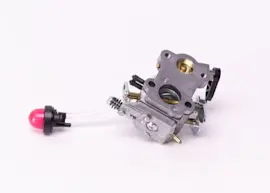
- Fuel filter flow and primer bulb operation
- Sharp chain and correct chain tension
- Proper bar oiling so the chain is not running dry
Parts that commonly affect running and cutting performance on this model include:
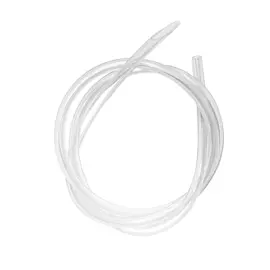
- Ayp lawn & garden equipment fuel line, large 530069216 (cracks or soft spots can cause air leaks)
- Craftsman lawn & garden equipment engine fuel filter 530095646 (restriction causes bogging)
- Primer bulb 530071835 (won’t prime or collapses)
Why it matters
Horsepower claims vary by how they’re measured. For real-world cutting, a sharp chain, correct fuel delivery, and good bar oiling make a bigger difference than the advertised HP number.
Last updated: January 2026
Is a 16 or 18 inch chainsaw better?
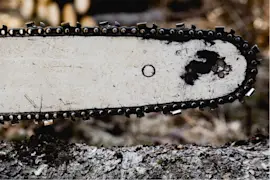
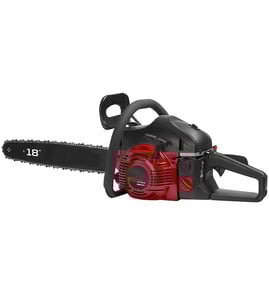
For a Snapper S1838LE gas chainsaw, an 18-inch bar is better when you need to cut larger diameter wood faster, while a 16-inch bar is better for lighter work, easier handling, and reduced kickback risk. The “better” choice depends on what you cut most often.
Quick comparison: 16-inch vs 18-inch
| Feature | 16-inch bar | 18-inch bar |
|---|---|---|
| Best for | Limbing, small trees, storm cleanup | Larger trees, thicker rounds, heavier cutting |
| Handling | Lighter feel, easier control | Heavier feel, more reach |
| Cutting speed in thick wood | Slower | Faster |
| Kickback tendency | Typically lower | Typically higher |
| Engine load | Lower | Higher |
How we recommend choosing
- Choose 16-inch if you mostly cut branches, small trunks, or do occasional homeowner work.
- Choose 18-inch if you regularly cut thicker wood and want more reach and productivity.
- Match bar length to engine power; longer bars demand more torque and can bog down if the saw is underpowered.
- Prioritize safety and control; a shorter bar is usually easier to keep stable in awkward positions.
- Keep the chain sharp and properly tensioned; performance differences shrink when the chain is dull.
Why it matters
Bar length affects more than “how big a tree you can cut”. It changes balance, how hard the engine works, and how likely the chain is to grab and kick back. For many homeowners, a 16-inch setup feels more predictable, while an 18-inch setup pays off when you cut larger wood often.
Parts that commonly affect cutting performance
If your saw feels weak or cuts poorly, these parts are often involved:
- Fuel delivery issues: clogged filter or cracked lines (see craftsman lawn & garden equipment engine fuel filter 530095646).
- Air leaks or fuel line problems: hardened lines or loose fittings.
- Oiling problems: a dry bar and chain cuts slowly and overheats.
For more cutting and setup tips, use our chainsaw care and troubleshooting tips.
Last updated: January 2026
What replacement parts are most commonly needed for the S1838LE?
For the Snapper S1838LE gas chainsaw, the most commonly needed replacement parts are typically fuel-system items (fuel line, fuel filter, primer bulb), chain-drive wear parts (clutch and clutch drum), and bar oiling parts (oil filter and oil pump). These parts address the most frequent no-start, leaking, and poor-cutting complaints.
Commonly replaced parts for the S1838LE
These are the parts we see replaced most often on gas chainsaws like the S1838LE, and several are available for this model:
- Fuel delivery: ayp lawn & garden equipment fuel line, large 530069216, craftsman lawn & garden equipment engine fuel filter 530095646, primer bulb 530071835
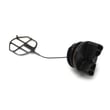
- Fuel sealing: fuel tank cap 580940901, ayp chainsaw fuel line fitting 530023877
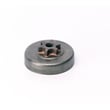
- Chain drive: chainsaw clutch 530014949, ayp chainsaw clutch drum 530047061
- Bar oiling: chainsaw oil filter 530056533, chainsaw oil pump 530071259, chainsaw oil pick-up assembly 530047663
Quick symptom-to-part guide
| Symptom | Most likely part area | Parts to check first |
|---|---|---|
| Won’t start or starts then dies | Fuel delivery | Fuel line, fuel filter, primer bulb |
| Leaking gas smell or wet tank area | Fuel sealing | Fuel tank cap, fuel line fitting |
| Chain won’t move or slips | Clutch system | Clutch, clutch drum |
| Bar and chain run dry, smoke, fast chain wear | Oiling system | Oil filter, oil pick-up, oil pump |
Why these parts matter
Fuel lines and primer bulbs harden and crack from age and ethanol fuel; filters clog from debris. Clutch components wear from heat and heavy cutting. Oiling parts plug up with sawdust, which can starve the bar and chain of oil and accelerate wear.
Tips before you order
- Match parts by model number S1838LE and the diagram location.
- Replace fuel line and fuel filter together if the line is brittle.
- If oiling is weak, clean the bar oil holes and oil outlet before replacing the pump.
- Use fresh, properly mixed fuel and empty the tank for storage.
For step-by-step troubleshooting, use our DIY resources like tips for a hard to start chainsaw and chainsaw leaking gas.
Last updated: March 2026