Owner’s manual

Does Craftsman make a band saw?
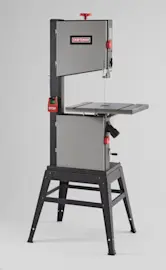
Yes. Craftsman makes band saws, including the Craftsman model 351224010 14-inch band saw covered by this parts page. Our 351224010 owner's manual confirms this model and provides the safety rules, specifications, and operating instructions.
What this Craftsman band saw is designed to do
According to the manual for model 351224010, this 14-inch band saw is designed for common shop cutting tasks, including:
- Hardwoods and softwoods
- Nonferrous metals (such as aluminum)
- Plastics
- Straight cuts using the included rip fence
- Cleaner operation when connected to dust collection (2-1/2 inch and 4 inch ports)
Key specs and features (model 351224010)
These are the core specs called out for this Craftsman 14-inch band saw:
| Spec | What it means for you |
|---|---|
| Throat depth at 90 degrees: 13-1/2 inches | Max width you can cut to the blade |
| Max depth of cut at 90 degrees: 8 inches | Max thickness you can resaw/cut |
| Table size: 15-3/4 x 21-3/4 inches | Work support area for larger stock |
| Dust ports: 2-1/2 inch and 4 inch | Connect to a suitable dust collector |
Safety and setup basics we recommend
Band saws are powerful shop tools; a few basics prevent most early problems and injuries:
- Wear ANSI Z87.1-rated eye protection every time you cut.
- Bolt the saw to the stand using the mounting holes in the base for stability.
- Use the correct extension cord gauge (for 120V, 16 AWG up to 50 ft; longer runs are not recommended).
- Disconnect power before any service, adjustment, or blade change.
- Keep the blade sharp and the saw clean; a sharp blade cuts straighter and runs cooler.
Why it matters
Knowing Craftsman makes (and supports) band saws like model 351224010 helps you match the correct parts, blade size, and setup steps to your exact saw. That prevents ordering mistakes and improves cut accuracy, dust control, and overall safety.
Last updated: February 2026
How to replace belt on Craftsman band saw?
To replace the drive belt on your Craftsman 351224010 14-inch band saw, we release blade tension first, then release belt tension, remove the lower wheel retaining ring, slide the wheel forward, swap the belt, and re-tension and track the blade before restoring power. See the 351224010 owner's manual for the exact sequence.
Safety first
- Unplug the band saw before opening doors or removing any components.
- Let the wheels stop completely before servicing.
- Wear cut-resistant gloves when handling the saw blade.
- Keep fingers clear of pinch points at the lower wheel and belt.
- Close and latch the upper and lower doors before reconnecting power.
Steps to change the drive belt (model 351224010)
- Release blade tension: Turn the blade tension knob counterclockwise until the blade slackens.
- Release belt tension: Use the crank handle to loosen belt tension.
- Open the doors: Turn the door locking knobs to open the upper and lower doors.
- Remove the lower wheel retainer: Use C-clip pliers to remove the retaining ring (C-clip) from the center of the lower wheel.
- Slide the lower wheel forward: Carefully slide the lower wheel forward while releasing the saw blade from that wheel.
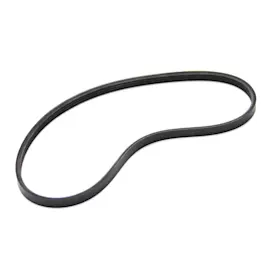
- Replace the belt: Remove the old drive belt and fit the new one; make sure the belt ribs seat correctly in the pulley grooves.
- Reassemble and set up: Reinstall the retaining ring, re-tension the drive belt, then reinstall and tension the blade.
After the belt is on: blade tension and tracking
After belt replacement, we set the blade up so it runs safely and cuts straight.
- Re-tension the blade.
- Turn the upper wheel by hand and confirm the blade runs centered on both wheels.
- Adjust tracking with the tracking knob, then lock it with the locking knob.
| Adjustment | What you are aiming for | What to do if it is off |
|---|---|---|
| Blade tension | Blade is taut, not fluttering | Increase tension gradually and recheck |
| Blade tracking | Blade runs centered on the wheels | Adjust tracking knob, then lock it |
| Belt seating | Ribs fully seated in pulley grooves | Reseat belt before applying tension |
Why it matters
A correctly installed drive belt transfers motor power to the wheels without slipping. Proper blade tension and tracking reduce vibration, improve cut accuracy, and help prevent premature wear on the belt, wheels, and bearings.
Last updated: February 2026
What are the parts of a bandsaw?
On the Craftsman 351224010 14-inch band saw, the main parts include the wheels that drive the blade, the table and fence system that supports your workpiece, and the blade guide and adjustment controls that keep the blade tracking and tensioned correctly. For model-specific component names and locations, use the owner's manual.
Main parts you will see on this saw
- Upper and lower wheels (bandwheels): support and drive the blade
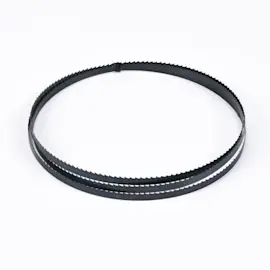
- Blade: the cutting loop that runs around both wheels
- Table: supports the workpiece; includes the blade slot
- Rip fence and guide rail: helps guide straight cuts (the manual lists a rip fence, guide rail, and rip fence carrier)
- Blade guide system and guide post: stabilizes the blade near the cut
- Tension and tracking controls: set blade tension and keep the blade centered on the wheels
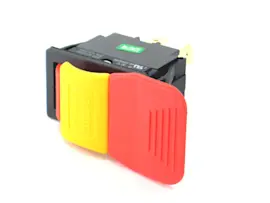
- On/Off switch: power control on the saw column
What each part does (quick reference)
| Part | What it does | Why you adjust it |
|---|---|---|
| Blade tension control | Tightens the blade | Prevents blade slipping and wandering cuts |
| Blade tracking control | Centers blade on the wheel | Reduces drift and helps protect the blade |
| Rip fence system | Guides stock for straight cuts | Improves accuracy and repeatability |
| Dust ports (2-1/2 inch and 4 inch) | Connects to dust collection | Keeps the cut line visible and reduces cleanup |
Why it matters
Knowing the names and functions of the band saw parts helps you troubleshoot faster (for example, a wandering cut often points to blade tension, tracking, or blade guide setup) and makes routine maintenance like blade changes and cleaning safer.
Safety and setup notes we recommend
- Wear ANSI Z87.1-rated eye protection before operating
- Unplug the saw before changing speed, adjusting belts, or servicing components
- Let the blade reach full speed before cutting
- Keep hands clear of the blade and moving parts
- Confirm blade tension and tracking are set before use
Last updated: February 2026
What is the specs of the Craftsman 12 inch bandsaw 351224010?
The Craftsman band saw model 351224010 is a 14-inch band saw (not a 12-inch). Key specs from the documentation include 13 1/8-inch throat depth, 8-inch maximum depth of cut at 90°, and a 15 3/4 x 21 3/4-inch cast iron table. For the full spec list and setup details, use the 351224010 owner's manual.
Key specifications (model 351224010)
- Band saw size class: 14-inch band saw
- Depth of throat at 90°: 13 1/8 in.
- Maximum depth of cut at 90°: 8 in.
- Table size: 15 3/4 x 21 3/4 in.
- Construction: Welded steel frame with cast iron table surface
- Included accessories/features: Stand, rip fence, work lamp
- Dust collection: 2 1/2-inch and 4-inch dust ports
Specs at a glance
| Spec | What it means | Model 351224010 |
|---|---|---|
| Throat depth | Max distance from blade to frame (resaw capacity across) | 13 1/8 in. |
| Max cut depth at 90° | Max thickness you can cut with table square | 8 in. |
| Table size | Work support area | 15 3/4 x 21 3/4 in. |
| Dust ports | Common shop vacuum or dust collector hookups | 2 1/2 in. and 4 in. |
Why it matters
These specs determine what stock you can handle safely and accurately. Throat depth affects how wide a workpiece you can cut; max cut depth affects resawing and thick lumber cuts; table size affects stability and control during curved and straight cuts.
Helpful setup and use notes
- Use the correct blade for the material (wood vs. nonferrous metal vs. plastic) to reduce drift and burning.
- Connect dust collection to improve visibility at the cut line and reduce buildup around guides.
- Keep the blade properly tensioned and tracked before making precision cuts.
- Follow the grounding and extension cord guidance in the manual for safe operation.
Last updated: February 2026