 Installation guide
 Owner’s manual
 Error Codes
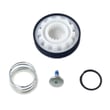


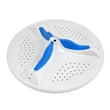
Does my Kenmore top load washer have a filter?
Yes. Kenmore model 11031633612 uses a drain-pump cleanout style filter (a small trap that catches lint and debris) that you access during a “won’t drain” or “slow drain” problem, not a routine, user-visible lint screen. For normal care, follow the cleaning steps in the 11031633612 owner's manual.
On most Kenmore high-efficiency top-load washers like 11031633612, the filter is part of the drain system (at the drain pump or in a cleanout hose/cap area). You typically access it from the bottom/front area after removing a lower panel or tilting the washer back.
- A small access hose and cap, or a pump cleanout cap
- Water that drains out when you open the cap (have towels ready)
- Coins, hair pins, lint, and small fabric pieces in the trap
- Unplug the washer.
- Turn off both water supply valves.
- Place towels and a shallow pan under the front/bottom area.
- Open the cleanout slowly and drain water in small amounts.
- Remove debris, rinse the trap, and reinstall the cap tightly.
- Run a Drain/Spin or Rinse/Spin cycle to confirm normal draining.
If you’re also dealing with draining issues, the drain pump itself can be the cause; the correct replacement for this model is the washer drain pump W10876600.
| What you notice | Most common cause | What to do first |
|---|---|---|
| Won’t drain, water left in tub | Clogged pump trap/filter | Clean the trap/cleanout |
| Hums but drains slowly | Partial clog or weak pump | Clean trap; inspect pump |
| Drains but leaves lint/debris | Overloading or detergent residue | Use HE detergent; monthly cleaning cycle |
A clogged drain trap can stop the washer from draining and spinning, which can leave clothes soaking wet and can strain the drain pump. Keeping the washer clean (including monthly maintenance cleaning) helps prevent odor and residue buildup.
Last updated: February 2026
How to identify a Kenmore washer model?
Your Kenmore washer model number is printed on the appliance’s model and serial tag; once you find it (for example, 11031633612), you can match the correct Kenmore washer parts, installation requirements, and Use and Care information for your exact machine.
On most Kenmore washers, the model tag is in one of these common spots:
- Under the lid along the top rim of the cabinet (top-load washers)
- Around the lid opening, near the hinge area
- On the back panel near the power cord
- Behind the control panel area (less common)
For this Kenmore top-load washer family, the Use and Care Guide lists model formats like 110.3163xxxx; your full model number should match the tag exactly, character for character. See the 11031633612 owner's manual for the model list and product identification details.
Kenmore model numbers often start with 110 (a common Kenmore prefix). The remaining digits identify the exact design, which determines the correct fit for parts like the lid lock, drain pump, and washplate.
- Copy the model number exactly as shown (include all digits)
- Use the full number, not just the first 3 digits
- Keep the serial number too; it helps confirm production details
- Match parts by model number first, then by part ID
| What you’re doing | Why the exact model number matters | Example part you may need |
|---|---|---|
| Fixing a no-start or lid won’t lock issue | Lid lock designs vary by model | Washer lid lock assembly W11188327 |
| Solving a no-drain problem | Pump style and mounting can differ | Washer drain pump W10876600 |
| Replacing a worn drive system | Clutch/gearcase versions vary | Clutch assembly W10754448 |
Using the exact model number prevents wrong-part returns and saves time during troubleshooting, especially on high-efficiency, low-water top-load washers that use model-specific control and drive components.
Last updated: February 2026
What is the UL code on the Kenmore Elite Oasis HE washer?
The UL code on a Kenmore Elite Oasis HE washer indicates the washer detected an unbalanced load and stopped or limited spinning to protect the basket and drive system. On Kenmore model 11031633612, correcting load balance and leveling typically clears the code.
- Pause the cycle and open the lid.
- Redistribute items evenly around the washplate; avoid one heavy item by itself.
- Remove a few items if the tub is tightly packed.
- Run Drain/Spin again after rebalancing.
- Confirm the washer sits solidly on the floor and does not rock.
For the exact leveling procedure and setup checks, follow the steps in the installation guide.
- Load mix: Wash similar-weight items together (towels with towels, jeans with jeans).
- Bulky items: Balance a comforter or blanket with a few towels.
- Flooring: A soft or uneven floor increases vibration and triggers imbalance.
- Spin selection: Use a lower spin speed for very bulky loads.
- Washer feet: Make sure all feet contact the floor and are locked after adjustment.
| What you notice | Most common cause | What to try first |
|---|---|---|
| Loud banging during spin | Load shifted to one side | Rebalance the load |
| Washer “walks” or rocks | Not level, feet not set | Level and lock feet |
| UL happens with most loads | Installation or suspension issue | Recheck leveling and load size |
Running repeated unbalanced spins increases stress on the basket, clutch, and drive components. Keeping loads balanced and the washer level helps the Kenmore 11031633612 spin smoothly, reduces noise, and helps prevent premature wear.
Last updated: February 2026
What is the average lifespan of a Kenmore washer?
A Kenmore washer typically lasts 10 to 15 years under normal household use. For Kenmore model 11031633612, routine care (proper loading, correct detergent, and periodic cleaning) helps you reach the longer end of that range; heavy use and chronic out-of-balance loads shorten it.
- Load habits: frequent overloading strains the drive system and suspension
- Out-of-balance operation: repeated banging increases wear on the basket support and drivetrain
- Water quality and detergent use: this high-efficiency design is intended for HE detergent
- Drain performance: slow draining makes the pump work harder and can leave residue behind
- Installation and leveling: a washer that is not level vibrates more and wears faster
Use these as your baseline care plan for 11031633612:
- Keep loads evenly distributed; pause and redistribute if the washer gets off balance
- Use the right amount of HE detergent to reduce buildup
- Periodically run a cleaning cycle (or a hot cycle with washer cleaner) to control odor and residue
- Check the drain hose routing and height; correct routing helps prevent slow drains
- Re-level the washer if it starts walking or vibrating; follow the steps in the installation guide
These parts are commonly involved when performance drops (noise, poor spin, draining issues, or lid not locking):
| Symptom | Often involved | Example part for this model |
|---|---|---|
| Won’t drain or drains slowly | Drain pump, drain hose | Washer drain pump W10876600 |
| Won’t start or won’t spin with lid closed | Lid lock | Washer lid lock assembly W11188327 |
| Loud grinding, poor agitation/spin | Clutch/drive components | Clutch assembly W10754448 |
A washer that is level, properly loaded, and draining correctly runs with less vibration and heat. That reduces stress on the motor, clutch, gear case, and basket system, which is the difference between a washer that lasts closer to 10 years and one that reaches 15.
Last updated: February 2026
What is the cubic foot of my Kenmore washer model 11031633612?
Kenmore washer model 11031633612 is a high-capacity top-load washer; its capacity is 6.2 cu. ft. Use the 11031633612 owner's manual to confirm you are referencing the correct model family and to see the matching feature set and installation requirements.
Because Kenmore 110-series washers include multiple designs and capacities, we recommend confirming the exact model and series details before comparing specs.
- Match the full model number on the washer’s model tag to 11031633612
- Cross-check the model list shown near the front of the 11031633612 owner's manual
- Use the installation dimensions in the 11031633612 installation guide to confirm you have the same platform
- Avoid using “110 series” capacity averages; they vary widely by design
A 6.2 cu. ft. basket supports bulky loads, but usable load size still depends on cycle selection and proper item movement.
| Load type | What to do | Why |
|---|---|---|
| Bulky items (comforter, blankets) | Use Bulky/Sheets cycle; load loosely | Prevents poor turnover and imbalance |
| Mixed everyday loads | Fill loosely to allow circulation | Improves cleaning and reduces wear |
| Heavy items (jeans, towels) | Balance around the washplate | Helps prevent out-of-balance spinning |
Correct capacity helps you choose the right load size, cycle, and HE detergent amount. Overloading increases strain on drive components like the washplate and clutch, and it can lead to off-balance conditions.
Last updated: February 2026





