


How many years should a snowblower last?
A Craftsman snowblower like model 536884900 typically lasts 10 to 20 years with normal residential use and consistent maintenance. The biggest life-extenders are keeping the auger/drive systems adjusted, replacing wear items on time, and storing the machine dry and fuel-safe.
Typical lifespan (what to expect)
Most gas snowblowers fall into these ranges:
| Snowblower type | Typical lifespan | What usually ends it first |
|---|---|---|
| Gas, mid to heavy duty | 10 to 20 years | Belts, friction drive wear, rust, neglected fuel system |
| Gas, light duty | 8 to 15 years | Auger/drive wear, corrosion, hard use |
| Electric (corded/battery) | 5 to 10 years | Motor/electronics, battery aging |
What makes a snowblower last longer
We see the longest service life when owners stay ahead of common wear points:
- Replace shear bolts immediately after an impact; running with damaged hardware can stress the auger gearbox (see snowblower shear bolt 1501216MA).
- Keep the auger and drive controls properly adjusted so belts do not slip or over-tension.
- Replace worn belts before they start glazing, squealing, or losing traction (see belt 3887MA).
- Inspect bearings and seals for play or leakage; catching wear early prevents bigger damage.
- Store it clean and dry; touch up chipped paint and keep the housing free of packed snow and salt.
Why it matters
A snowblower usually does not “wear out” all at once; it becomes unreliable when small wear items (shear bolts, belts, bearings) are ignored. Replacing those parts on schedule keeps your Craftsman 536884900 throwing snow consistently and protects higher-cost components.
Last updated: January 2026
What is the most common problem with snow blowers?
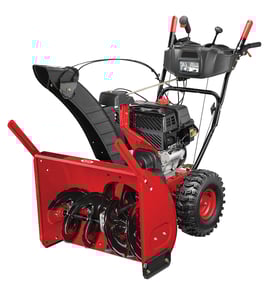
The most common problem we see with snow blowers, including the Craftsman 536884900 25" snow blower, is a no-start or hard-start condition caused by old fuel and a dirty carburetor. Close behind are chute clogs and auger or drive issues caused by broken shear bolts or worn belts.
Most common issues (and what to check first)
- Won’t start / starts then dies: drain old gas, add fresh fuel, check the spark plug, and clean the carburetor bowl and jets.
- Runs but won’t throw snow: clear packed snow in the chute and impeller area (engine off, key removed).
- Auger won’t turn: inspect shear bolts and replace any that are broken with the correct type, such as a snowblower shear bolt 1501216MA.
- Poor drive or won’t move: check for a worn or slipping auger/drive belt, such as the belt 3887MA.
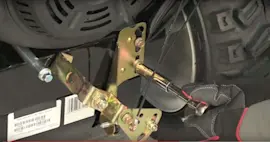
- Controls feel loose or don’t engage: inspect linkage and cable tension; a stretched or missing clutch-cable spring can prevent full engagement.
Quick symptom-to-cause guide
| Symptom | Most likely cause | Typical fix |
|---|---|---|
| No start after storage | Stale fuel, varnished carburetor | Fresh fuel, carb clean, new spark plug |
| Starts, then stalls under load | Fuel restriction, icing, dirty carb | Clean carb, check fuel cap vent |
| Auger stops suddenly after hitting object | Shear bolt broken | Replace shear bolt(s) |
| Throws snow weakly | Chute clog, belt slip | Clear clog, inspect/replace belt |
Why it matters
Fuel and shear-bolt issues are common because snow blowers often sit unused for months, and the auger is designed to sacrifice a shear bolt to protect the gearbox when it hits ice, gravel, or a hidden object.
Tips to prevent repeat problems
- Use fresh fuel and run the engine dry (or treat fuel) before long storage.
- Keep a spare shear bolt kit on hand for storms.
- Avoid ingesting gravel; set skid shoes/height correctly for your surface.
- Inspect belts each season for glazing, cracking, or slack.
Last updated: January 2026
How do I tell what year my snowblower is?
For your Craftsman snowblower model 536884900, the most reliable way to determine the year is to use the engine manufacture date code (on the engine shroud, valve cover, or blower housing). That code decodes to a specific build date, which closely matches the snowblower’s production timeframe.
Where to look for the date information
Check these common locations on a 25-inch snow blower:
- Engine ID label or stamped code on the engine (often near the muffler area)
- Blower housing or recoil starter area (sticker or stamped numbers)
- Frame tag near the handles or axle area (may show model and serial)
- Auger housing side panel (sometimes has a product label)
If you find a Briggs and Stratton style code, use the manufacturer’s decoding method to translate it into a calendar date.
Quick decoding checklist (what to write down)
Before you start decoding, record these details:
- Engine model number
- Engine type number
- Engine code number (this is the key for the manufacture date)
- Snowblower model number: 536884900
Example of how many engine codes work
Many small-engine code formats begin with digits that represent the year, followed by digits for month and day. If your code starts with something like “99…”, that commonly indicates 1999 as the year.
| What you find | What it usually tells you | What to do next |
|---|---|---|
| Engine code number | Exact engine build date | Decode the code into year, month, day |
| Snowblower serial number | Production run info | Use it to confirm the timeframe |
| Parts wear history | How long it has been used | Use as a reasonableness check |
Why it matters
Knowing the year helps us match the correct Craftsman 536884900 parts and revisions, especially for wear items like belts, bearings, and shear bolts that can vary by production run.
Parts that often get replaced once you identify the correct build
If you are servicing the machine after confirming its age, these are common maintenance parts to check:
- Snowblower shear bolt 1501216MA (protects the auger gearbox if the auger jams)
- Belt 3887MA (drives auger or traction depending on configuration)
- Spring 1673MA (often used in clutch cable tensioning)
Last updated: January 2026
Is it worth fixing a snowblower?
Yes, it’s usually worth fixing a Craftsman snowblower like model 536884900 when the problem is a common wear item (belt, shear bolt, cable spring) and the total repair cost stays well below the price of a comparable new 25-inch snow blower. Replacement makes more sense when the machine needs major drivetrain or engine work.
Quick decision checklist
- Repair it if it starts well and only the auger/drive performance is off (belt, adjustment, shear bolt).
- Repair it if the housing and auger assembly are solid (no major cracks, bent auger shaft, or severe rust-through).
- Repair it if you can complete the job with basic hand tools and safe lifting.
- Replace it if the engine has low compression, heavy smoking, or repeated no-start issues after fuel-system service.
- Replace it if the gearbox/worm gear area is noisy, leaking heavily, or binding under load.
Typical “worth it” repairs for this model
These are the kinds of fixes that commonly restore performance at a reasonable cost:
- Replace a worn auger/drive belt such as the belt 3887MA.
- Replace broken shear bolts (they are designed to fail to protect the auger/gearcase), such as the snowblower shear bolt 1501216MA or snowblower shear bolt 577015MA.
- Restore auger engagement feel by replacing the clutch cable spring, such as the spring 1673MA.
Cost comparison guide
| Situation | Typical outcome | Usually worth fixing? |
|---|---|---|
| Belt slipping, auger stops under load | Restores throwing power | Yes |
| Shear bolts broken after hitting ice/rocks | Quick protection repair | Yes |
| Drive/auger engagement feels loose | Often adjustment or spring | Yes |
| Loud grinding from gearcase/worm area | Internal drivetrain wear | No |
| Engine major issues (smoke, knock, low power) | High labor and parts cost | No |
Why it matters
A 25-inch snow blower is expensive to replace, and many “no throw” or “won’t move” complaints come down to wear parts. Fixing those early prevents secondary damage to pulleys, bearings, and the auger drive system.
Last updated: January 2026