Owner’s manual
 Error Codes




What is the average lifespan of a Kenmore washer?
A Kenmore washer typically lasts 10 to 15 years with normal household use and basic maintenance. For the Kenmore 79641162411 washer, the exact lifespan still depends most on load size, detergent use, and how well the tub and drain system are kept clean; see the 79641162411 washer manual for care guidance.
Typical lifespan range (what we see most often)
Most Kenmore washers fall into a predictable range when they are installed correctly and not routinely overloaded:
- 10 to 15 years is the normal average lifespan
- 8 to 10 years is common with heavy use (large families, frequent bulky loads)
- 15+ years is realistic with lighter use and consistent cleaning
- Early failures are usually tied to drain, fill, or door-lock issues, not the cabinet itself
What shortens washer life fastest
These habits tend to wear out key components (pump, inlet valves, door lock, bearings) sooner:
- Overloading or washing heavy items too often
- Using too much HE detergent (causes oversudsing and residue)
- Leaving the door closed between loads (traps moisture and odor)
- Skipping routine cleaning of the gasket, dispenser, and drain filter area
- Running with slow draining or repeated error codes without correcting the cause
Maintenance that helps you reach the high end of the range
Use this as a simple longevity checklist:
- Run a monthly cleaning cycle (or a hot wash with a washer cleaner)
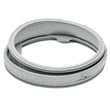
- Wipe the door boot dry after laundry days
- Check pockets to prevent coins, screws, and debris from reaching the pump
- Level the washer to reduce vibration and bearing stress
- Address draining or filling problems early (before they strain the motor and controls)
Quick guide: repair vs replace timing
| Washer age | Typical approach | Why |
|---|---|---|
| 0 to 7 years | Repair is usually worthwhile | Most major parts still have good remaining life |
| 8 to 12 years | Case-by-case | Balance repair cost vs. overall condition |
| 13 to 15+ years | Often consider replacement | Multiple wear items may be near end-of-life |
Why it matters
Knowing the average lifespan helps you decide whether a symptom (noise, leaks, poor draining, door not locking) is likely a one-part fix or a sign of broader wear. On a front-load design like the Kenmore 79641162411, staying ahead of moisture, residue, and draining issues is the biggest factor in long service life.
Last updated: January 2026
How do I identify my Kenmore washer?
To identify your Kenmore washer, we recommend matching the model number on the appliance’s ID label to 79641162411. On this model, the label is typically on the back of the control panel, along the cabinet edge, or around the door opening on front-load designs; see the 79641162411 owner’s manual for label-location details.
Where to look for the model and serial label
Check these common spots first (use a flashlight and wipe dust off the sticker):
- Back of the control panel (rear edge)
- Inside the door opening or door jamb (front-load style)
- Along the cabinet frame near the bottom edge
- Rear panel of the washer cabinet
- Under the lid area (on some washer designs)
What to write down (and why)
Record the full model number and serial number exactly as shown. For Kenmore models, a single missing digit can point to a different parts list, wiring, or control setup.
| What you see on the label | Why it matters when ordering parts |
|---|---|
| Model number (example: 79641162411) | Ensures diagrams and parts match your exact washer |
| Serial number | Helps confirm production run and compatible revisions |
| Type (front-load or top-load) | Affects access panels, door/lid parts, and troubleshooting steps |
Quick tips to avoid mix-ups
- Use the full model number, not just “Kenmore 796”
- Copy letters and numbers exactly (no spaces unless the label shows them)
- If the label is worn, take a clear photo and zoom in
- Match the model number on the label to the one on your paperwork
Why it matters
Kenmore washers often share similar styling across multiple model numbers. Using the exact model number (79641162411) helps us point you to the correct washer parts, diagrams, and repair steps the first time.
Last updated: January 2026
Who makes Kenmore replacement parts?
For Kenmore washer model 79641162411, replacement parts are made by the original equipment manufacturers that built the components for this Kenmore design. In practice, that means you will often see parts labeled from suppliers such as LG Electronics for this model’s compatible components (for example, drain and door-lock parts).
What you’ll see when shopping parts for model 79641162411
Kenmore is a brand name; the parts supply chain typically includes multiple OEMs. For this washer, many compatible replacement parts in our catalog are identified as LG-made.
- Look for the exact model number 79641162411 when selecting parts
- Match by part number/part ID, not just by description
- Expect OEM branding on packaging or in the part listing (example: “by LG Electronics”)
- Use diagrams and part lists to avoid ordering a similar-looking but incompatible part
- If a part has “replaces” numbers, those are cross-references, not your washer model
Examples of OEM-labeled parts for this Kenmore washer
Here are a few examples that show the OEM labeling you may encounter for model 79641162411:
| Component type | Example compatible part listing | What it does |
|---|---|---|
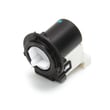
| Drain system | Drain pump motor (4681EA2001T) - washer part by lg electronics 4681EA2001T | Pumps water out during drain and spin |
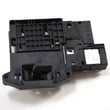
| Door locking | Lg washer door lock EBF61315802 | Locks the door so the washer can run safely |
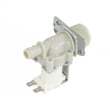
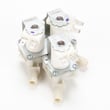
| Water fill | Lg washer water inlet valve 5221ER1003A | Controls water entering the washer |
How we recommend confirming you’re getting the right manufacturer part
Even when the OEM is known, the safest way to confirm fit is to verify by model and part ID.
- Use the parts list and diagrams in the 79641162411 manual
- Compare the old part’s label to the replacement listing (numbers and connector style)
- If your washer has a serial tag, keep it handy; some revisions use different parts
Why it matters
Using the correct OEM-compatible part helps prevent leaks, drain errors, door lock problems, and repeat repairs caused by mismatched electrical connectors or mounting points.
Last updated: January 2026