- Kenmore refrigerator water filters
- Whirlpool refrigerator water filters
- Samsung refrigerator water filters
- GE refrigerator water filters
- LG refrigerator water filters
- Frigidaire refrigerator water filters
- KitchenAid refrigerator water filters
- Maytag refrigerator water filters
- Kenmore Elite refrigerator water filters
- Estate refrigerator water filters
- GE Profile refrigerator water filters
- Amana refrigerator water filters
- Bosch refrigerator water filters
- Dacor refrigerator water filters
- Electrolux refrigerator water filters
Top DIY repair help
View All Repair Categories
Appliances
Lawn & Garden
Power Tools
Home Improvement
Sports & Leisure
Heating & Cooling
Quick Links
How to replace a lawn mower ignition coil on a flathead engine
less than a minute readMay 18Lyle Weischwill
Repair time and Difficulty
30 minutes or less
Tools Required
- Phillips screwdriver
- Socket wrench set
- Feeler gauge
- Work gloves
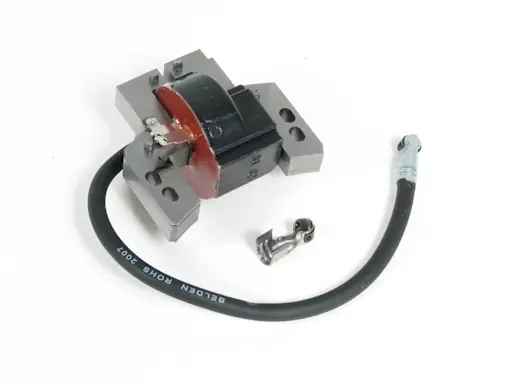
This DIY lawn mower repair guide shows how to replace the ignition coil on a lawn mower that has a flathead engine. The ignition coil sends the electric current to the spark plug to ignite the fuel in the cylinder. If the ignition coil doesn't send electric current to the spark plug when you pull the starter rope, replace the coil with the manufacturer-approved lawn mower part.
Use this repair procedure to replace the ignition coil on common Briggs & Stratton flathead engines that power Craftsman, Husqvarna, MTD, Murray, Snapper, Toro, Troybilt, Cub Cadet and Ariens walk-behind lawn mowers.
If your lawn mower is a newer model with an overhead valve (OHV) engine, see our repair guide How to Replace a Lawn Mower Ignition Coil on an OHV Engine.
Instructions
- 1. Disconnect the spark plug wire
Wear work gloves to protect your hands.
Disconnect the spark wire so there's no chance that the mower could accidentally start.
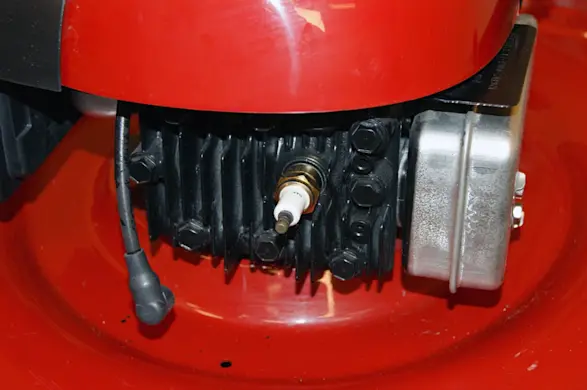
PHOTO: Disconnect the lawn mower spark plug wire.
- 2. Remove the starter rope from the guide
Remove the starter rope from the rope guide. If the rope won't slip past the guide and the handle, loosen the guide.
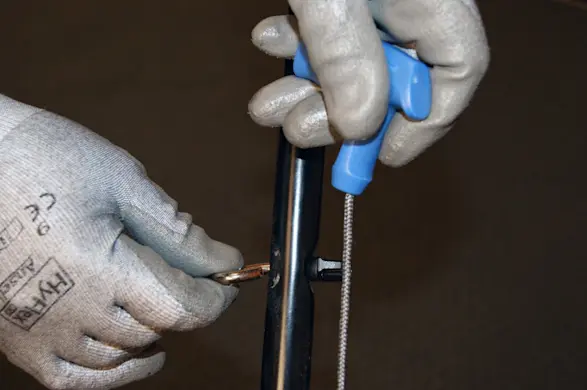
PHOTO: Remove the starter rope.
- 3. Remove the engine cover
Remove the screws securing the engine cover to the engine. Slide the rope through the hole in the engine cover.
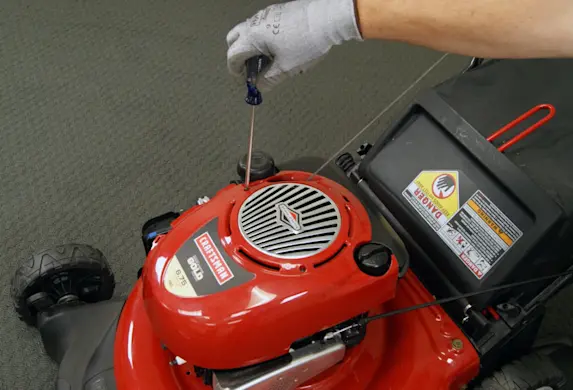
PHOTO: Remove the engine cover.
- 4. Remove the fuel tank
Remove the screws that secure the fuel tank to the engine. Lift the tank off, being careful to keep the fuel tank upright so it doesn't not leak.
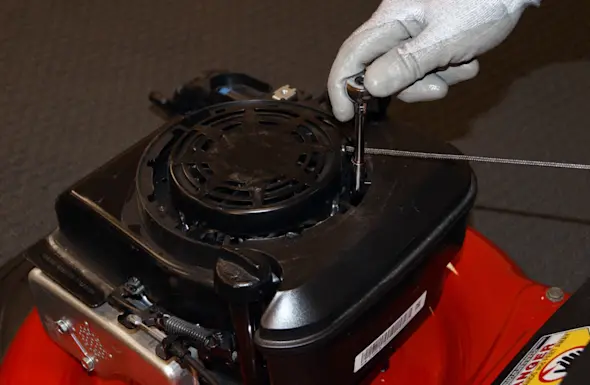
PHOTO: Remove the fuel tank.
- 5. Remove the dipstick
Remove the screw that secures the dipstick tube to the housing. Remove the dipstick from the engine and plug the hole with a paper towel to keep debris from falling into the engine.
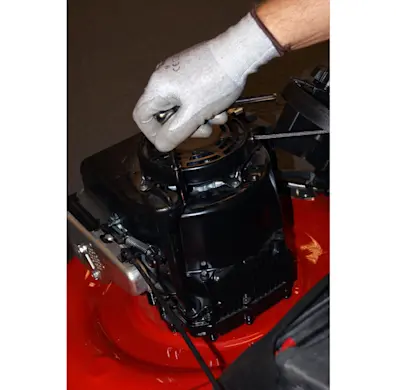
PHOTO: Remove the dipstick tube.
- 6. Remove the engine blower housing
Remove the bolts securing the blower housing to the engine and remove the housing from the engine.
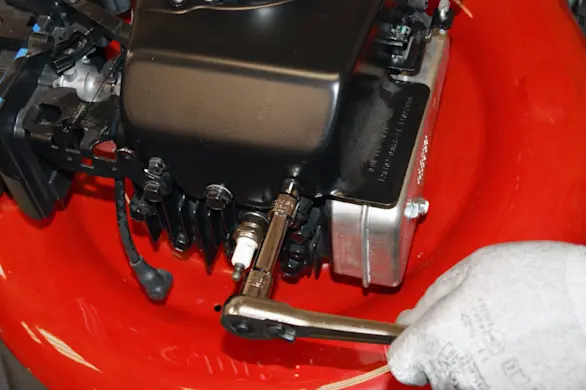
PHOTO: Remove the blower housing.
- 7. Remove the ignition coil
Turn the flywheel so the magnet is pointing away from the ignition coil.
Remove the screws from the ignition coil.
Lift the ignition coil up and disconnect the kill wire.
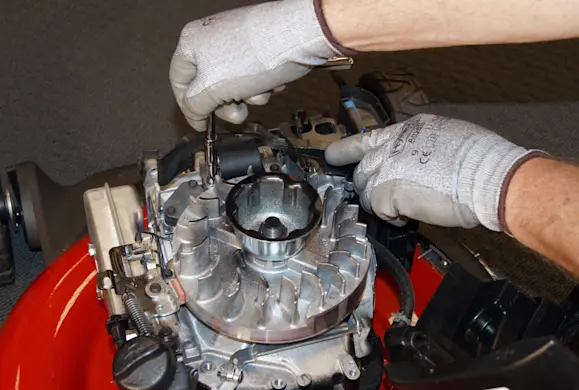
PHOTO: Remove the screws from the coil. 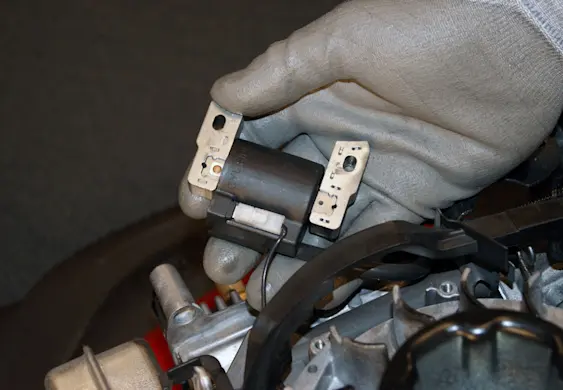
PHOTO: Lift the ignition coil up. 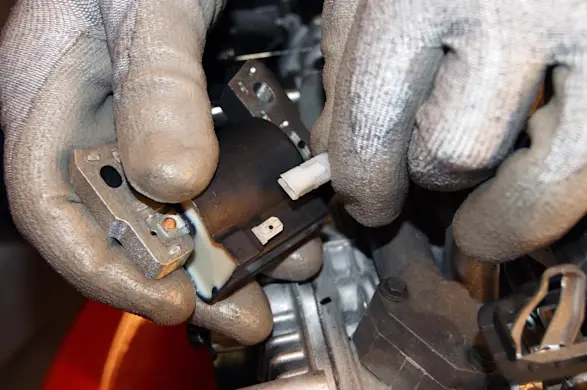
PHOTO: Remove the kill wire.
- 8. Install the new ignition coil
Connect the kill wire to the new ignition coil.
Place the new ignition coil onto the engine. Install the two bolts leaving them loose. Pull the coil away from the engine.
- 9. Set the air gap
While holding the feeler gauge in between the coil and flywheel, allow the magnet to pull the coil against the feeler gauge. Tighten the mounting screws.
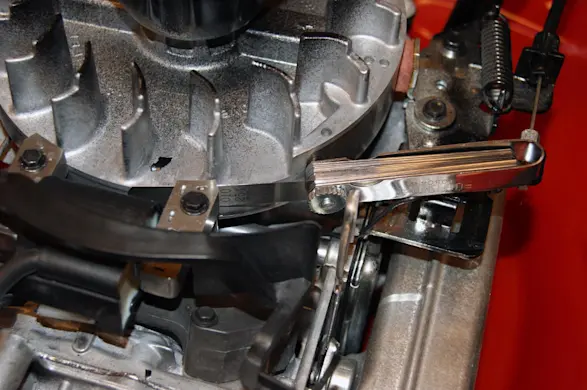
PHOTO: Insert the feeler gauge. 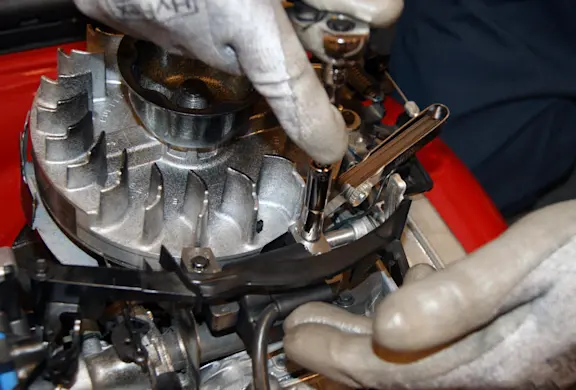
PHOTO: Tighten the coil mounting screws. The correct gap for most engines is 0.010-inch.
- 10. Reassemble the mower
Position the engine blower housing on the engine and bolt it into place.
Remove the paper towel from the dipstick opening, slide the dipstick into the engine and secure it with the screw.
Feed the starter rope handle through the engine cover up to the rope guide.
Reinstall the fuel tank.
Position the engine cover on the engine and screw it into place.
- 11. Reconnect the spark plug wire
Attach the spark plug wire and make sure the mower works properly.