 Owner’s manual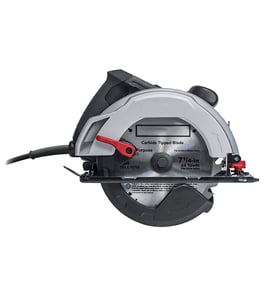



What size blade is a Craftsman 32010871 circular saw?
Your Craftsman 32010871 circular saw uses a 7-1/4 inch (184 mm) blade; that is also the maximum blade capacity for this saw. Using a larger blade can interfere with the blade guards and create an unsafe cutting condition (see the 32010871 owner's manual).
Blade size and key cutting specs
Here are the core blade-related specs for the Craftsman 32010871:
- Blade diameter: 7-1/4 in. (184 mm)
- Maximum blade capacity: 7-1/4 in.
- Max cutting depth at 90°: 2-3/8 in.
- Max cutting depth at 45°: 1-13/16 in.
- Maximum bevel angle: 52°
| Spec | Value |
|---|---|
| Blade diameter (recommended/standard) | 7-1/4 in. (184 mm) |
| Maximum blade capacity | 7-1/4 in. |
| Cutting depth at 90° | 2-3/8 in. |
| Cutting depth at 45° | 1-13/16 in. |
Fit and safety checks before you buy a blade
Even with the correct 7-1/4 inch diameter, we recommend these quick checks:
- Match the arbor (center hole) size to your saw’s spindle.
- Do not use a blade so thick that the outer blade washer cannot fully engage the spindle.
- Confirm the blade is installed with teeth pointing up at the front of the saw.
- Use the spindle lock button when loosening or tightening the spindle screw.
- Choose the blade type for the job (general purpose, framing/ripping, plywood/finish, etc.).
Why it matters
Blade diameter and thickness directly affect guard clearance, washer engagement, and kickback risk. Sticking with the specified 7-1/4 inch blade helps your Craftsman 32010871 cut to its rated depth while keeping the upper and lower blade guards working correctly.
Last updated: February 2026
Who makes Craftsman circular saws?
Today, Craftsman is a brand owned by Stanley Black & Decker, and Craftsman circular saws are made for that brand by its manufacturing partners. Sears originally owned the Craftsman brand, and Sears still has limited rights to sell certain Craftsman-branded products.
What this means for parts and manuals
For your Craftsman circular saw model 32010871, the most reliable way to match parts and specifications is by using the model-specific documentation and diagrams, not the brand name alone.
- Use the model number 32010871 when searching parts and specs
- Confirm electrical requirements before troubleshooting (this saw is 120V, 60 Hz AC)
- Match blade size and ratings to the saw’s specifications (this model uses a 7-1/4 in. blade)
- Use the correct accessories (edge guide, blade wrench, spindle lock) listed for the saw
- Follow the safety and maintenance guidance in the owner's manual
Quick spec check for model 32010871
These model-specific specs help you identify compatible blades and understand performance:
| Spec | Model 32010871 value |
|---|---|
| Power input | 120V, 60 Hz AC |
| Motor | 13 amps |
| No-load speed | 5000 RPM |
| Blade diameter | 7-1/4 in. (184 mm) |
| Max bevel | 52° |
Why it matters
Craftsman tools can be produced across different factories and time periods, so “who makes it” is less useful than matching by model number. Using the correct 32010871 specs helps prevent poor cutting performance, blade binding, and unsafe operation.
Last updated: February 2026
Does Craftsman make a track saw?
Yes. Craftsman has made track-saw style systems (often sold as a saw plus a guide track) that let you make long, straight, splinter-controlled cuts similar to a traditional track saw. Your Craftsman circular saw model 32010871 is a standard 7-1/4 inch circular saw that uses an edge guide, not a dedicated track system (see the owner's manual).
Track saw vs. circular saw with a guide: what’s the difference?
A true track saw rides on a purpose-built track and is designed for repeatable, cabinet-grade straight cuts. The 32010871 is designed to be guided with an edge guide or straightedge clamped to the workpiece.
| Feature | Track saw system | Craftsman 32010871 circular saw |
|---|---|---|
| Guidance method | Dedicated track/rail | Edge guide or clamped straightedge |
| Best use | Sheet goods, long rip cuts | General cutting, framing, crosscuts |
| Cut control | Very high repeatability | Depends on guide setup and technique |
| Typical accessories | Track sections, connectors, clamps | Edge guide (included), clamps |
How to get track-saw-like results with the 32010871
We recommend using the built-in features of this model to improve straight-cut accuracy.
- Use the included edge guide for consistent offset cuts.
- Clamp a straightedge or guide board for long cuts in plywood.
- Set depth-of-cut so the blade just clears the material (reduces tear-out and binding).
- Use the bevel scale (0° to 52°) and lock it firmly before cutting.
- Keep the blade sharp and installed correctly; a dull or incorrect blade can bind or smoke.
Why it matters
Choosing between a track saw system and a standard circular saw setup affects cut quality, safety, and speed. The 32010871 includes features like LaserTrac, an LED worklight, and an edge guide that help you cut accurately, but it is not the same tool category as a dedicated track saw.
Last updated: February 2026
How to change an old Craftsman circular saw blade?
To change the blade on your Craftsman circular saw model 32010871, unplug the saw first, lock the spindle, remove the spindle screw and washers with the blade wrench, swap the blade, then reinstall the washers and screw and confirm the lower guard moves freely. See the owner's manual for the exact steps and diagrams.
Safety first (do this every time)
- Unplug the saw before you touch the blade, guard, or mounting hardware.
- Keep hands away from the cutting area; blades can coast after the trigger is released.
- Check that the lower blade guard closes properly before each use.
- Use only the correct blade size and arbor hole shape for the saw.
- Never use damaged or incorrect blade washers or the wrong bolt.
Blade change steps (Craftsman 32010871)
- Disconnect power: Unplug the cord.
- Set the saw for access: Place the saw on its side on a flat surface. Raise the saw fully using the depth-of-cut adjustment so you can reach the blade area more easily.
- Lock the spindle: Press and hold the spindle lock button.
- Loosen the spindle screw: Use the stored blade wrench; rock it slightly until the spindle lock fully engages, then turn the spindle screw counterclockwise to remove it.
- Remove hardware and blade: Take off the outer washer(s), retract the lower guard as needed, and remove the blade.
- Install the new blade: Put the blade on the spindle in the correct direction, reinstall the washer(s) and spindle screw, then tighten securely while holding the spindle lock.
- Final check: Spin the blade by hand (with the saw still unplugged) to confirm it turns freely and the guard returns quickly.
Quick spec check (helps you buy the right blade)
| Item | What to match | Why it matters |
|---|---|---|
| Blade diameter | 7-1/4 in. (184 mm) | Ensures proper cutting depth and guard coverage |
| Arbor hole | Correct size and shape (diamond vs. round) | Prevents wobble and loss of control |
| Washers/bolt | Use the saw’s correct hardware | Reduces kickback risk and improves safety |
Why it matters
A correctly installed, sharp blade reduces binding and kickback risk, and it keeps the lower blade guard working as designed for safer cuts.
Last updated: February 2026
How much should I spend on a circular saw?
For a circular saw, we recommend budgeting based on how often you’ll use it and the features you need. For a homeowner, a solid corded saw is typically the best value; for frequent jobsite use, spending more for durability, power, and safety features pays off. For your Craftsman 32010871, confirm operating and safety details in the owner's manual.
Practical budget ranges (what you get)
- $50 to $100: Basic corded saws for occasional DIY; fewer adjustments and simpler guides.
- $100 to $200: Better cut accuracy and ergonomics; stronger motors and smoother bevel/depth adjustments.
- $200 to $350+: Pro-grade durability; improved dust control, refined guards, and premium build quality.
- Add $50 to $200+ if you’re buying into a cordless battery platform (batteries and charger often add cost).
| Budget | Best for | Typical tradeoffs |
|---|---|---|
| $50 to $100 | Light DIY, small projects | More vibration, less precise adjustments |
| $100 to $200 | Regular home projects | Heavier than entry-level, but more capable |
| $200+ | Frequent use, tougher materials | Higher upfront cost, features you may not need |
What matters most when choosing (especially for the 32010871)
Your Craftsman 32010871 is a corded 120V, 60 Hz AC-only circular saw with a 13-amp motor and 5,000 RPM no-load speed, plus a laser guide and LED worklight. When comparing saws, prioritize:
- Power and speed: Higher amp corded saws generally hold speed better in thicker stock.
- Blade and arbor compatibility: Always use the correct blade size and the correct arbor hole shape; the manual warns mismatched arbor holes can cause erratic running and loss of control.
- Safety features: A smooth lower blade guard action and clear sightline reduce risky handling.
- Accuracy aids: An edge guide can reduce binding and improve straight cuts.
- Electrical fit: Corded saws should match your household power; avoid using DC sources.
Why it matters
Spending the right amount reduces blade binding, improves cut accuracy, and helps you work safer. The 32010871 manual emphasizes safe setup and operation (including laser safety and unplugging the saw before blade changes), which becomes even more important as projects get larger and more frequent.
Last updated: February 2026
