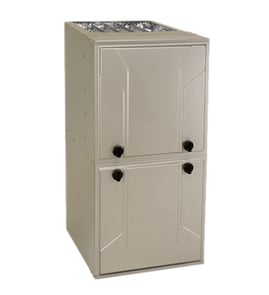
Are 80 furnaces being phased out?
Yes. For a Trane XB80 (an 80% AFUE, non-condensing gas furnace), the market is moving toward higher-efficiency condensing furnaces, and new-installation rules in many areas increasingly favor 90%+ AFUE equipment. Existing 80% furnaces can typically stay in service; the biggest change is what you can install when it is time to replace.
What “phased out” usually means for an 80% AFUE furnace
In most cases, “phased out” refers to new sales and new installations meeting higher minimum efficiency standards, not forcing you to remove a working furnace.
- You can usually repair and maintain an existing 80% furnace like the Trane XB80.
- When replacing, you may be steered toward a condensing (90% to 98% AFUE) model.
- Some homes need venting changes (PVC intake/exhaust, condensate drain) to install a condensing furnace.
- Local code, climate region, and venting configuration can affect what is allowed.
- If your furnace is near end-of-life, planning early helps avoid rushed decisions.
What to expect when you replace an XB80
A replacement decision often comes down to venting, budget, and how long you plan to stay in the home.
| Option | Typical AFUE | Venting/condensate changes | Best fit when… |
|---|---|---|---|
| Another non-condensing furnace | ~80% | Usually minimal | Allowed locally and existing venting is ideal |
| Condensing furnace | ~90% to 98% | Often required | You want higher efficiency and long-term savings |
| Heat pump (electric) | Varies | Electrical and ductwork considerations | You want electrification or mild-climate efficiency |
Why it matters
Efficiency rules and installation requirements can change the total replacement cost, not just the furnace price. A condensing upgrade can add venting and drain work, but it also reduces fuel use compared with an 80% AFUE furnace.
Practical next steps we recommend
- Confirm your exact model and configuration (upflow/downflow, vent type) using how to find your appliance model number (and what it means for parts).
- If you are replacing soon, ask your installer what venting and condensate routing would be needed for a 90%+ furnace.
- If you are keeping the XB80, stay on top of basics: filter changes, burner inspection, and checking for loose wiring.
- For electrical troubleshooting, use safe test methods and reference how to use a multimeter to test electrical parts video.
- If you suspect a blown fuse or control issue, follow how to tell if a fuse is blown before replacing components.
Last updated: February 2026
How many sq ft will an 80,000 BTU furnace heat?
An 80,000 BTU furnace like the Trane XB80 typically heats about 1,600 to 2,500 sq ft, depending on your climate zone, insulation, air leakage, ceiling height, and duct condition. For accurate sizing, we base the final answer on a Manual J load calculation, not square footage alone.
Quick sizing range (what most homes see)
Use this as a practical starting point for an 80,000 BTU input furnace; actual delivered heat depends on efficiency (AFUE) and installation.
- Cold climates / older or leaky homes: ~1,600 to 1,900 sq ft
- Mixed climates / average insulation: ~1,900 to 2,300 sq ft
- Mild climates / tight, well-insulated homes: ~2,300 to 2,500 sq ft
What changes the square footage the most
These factors usually move the number more than the furnace brand or model family:
- Climate and design temperature (how cold it gets where you live)
- Insulation and window quality (attic, walls, double pane vs. older windows)
- Air sealing (drafts, recessed lights, rim joists, fireplace leakage)
- Ceiling height (more cubic feet needs more heat)
- Duct losses (leaky ducts in an attic or crawlspace can waste a lot of heat)
- Furnace efficiency (AFUE) (higher AFUE means more usable heat from the same input BTUs)
Why “80,000 BTU” does not equal “80,000 BTU of heat to the house”
Most furnaces are rated by input BTU. The heat your home actually gets is closer to:
| Rating type | What it means | Simple example for 80,000 BTU input |
|---|---|---|
| Input BTU | Fuel energy going into the furnace | 80,000 BTU/hr in |
| Output BTU | Heat delivered after efficiency losses | ~64,000 BTU/hr out at 80% AFUE; ~76,000 BTU/hr out at 95% AFUE |
Why it matters (comfort and cost)
Oversizing can cause short cycling, temperature swings, and higher wear on parts like the igniter, flame sensor, and blower components. Undersizing can leave you cold during the coldest nights and run the furnace nonstop.
Best next step for the Trane XB80
If you are replacing equipment or trying to confirm the right size:
- Compare your current furnace input BTU and AFUE to the replacement
- Check duct sizing and return air restrictions
- Use a Manual J load calculation (or have your HVAC pro run one)
- Use our model number resources to match the correct unit and parts list: how to find your appliance model number (and what it means for parts)
Last updated: February 2026
How much is a Trane XB80 furnace?
A Trane XB80 gas furnace/heater typically costs about $4,300 to $5,500 installed (equipment plus common labor and permit costs). Your final price depends most on the furnace size (BTU output), venting changes, and any ductwork or electrical updates needed.
What changes the installed price the most
- Furnace size and efficiency: Higher BTU and more complex configurations cost more.
- Venting and gas line work: Converting vent type or resizing piping adds labor and materials.
- Ductwork modifications: Plenum transitions, returns, or airflow balancing can add significant time.
- Electrical and controls: New thermostat wiring, condensate safety switches, or control upgrades can add cost.
- Permits and code requirements: Local inspection requirements vary by area.
Quick cost breakdown (typical)
| Cost item | What it usually includes | Typical share of total |
|---|---|---|
| Furnace equipment | Furnace cabinet, burners, blower section | 40% to 60% |
| Labor | Removal, set, hookup, startup, testing | 30% to 50% |
| Permits and misc. materials | Permit, fittings, vent pipe, transitions | 5% to 15% |
How to get the right price for your exact XB80 setup
- Confirm the full model number on the rating plate (XB80 is a series name used across multiple sizes).
- Note whether your current system is upflow, downflow, or horizontal.
- Check if your existing venting is metal vent (Category I) or another configuration.
- Ask for a written scope that includes startup testing (temperature rise, gas pressure, and safety checks).
Why it matters
An installed price that looks low often excludes important work like venting corrections, duct transitions, or proper commissioning. For a gas furnace/heater like the Trane XB80, correct setup protects comfort, efficiency, and safe operation.
For help confirming the exact model number you need to price, use how to find your appliance model number (and what it means for parts).
Last updated: February 2026